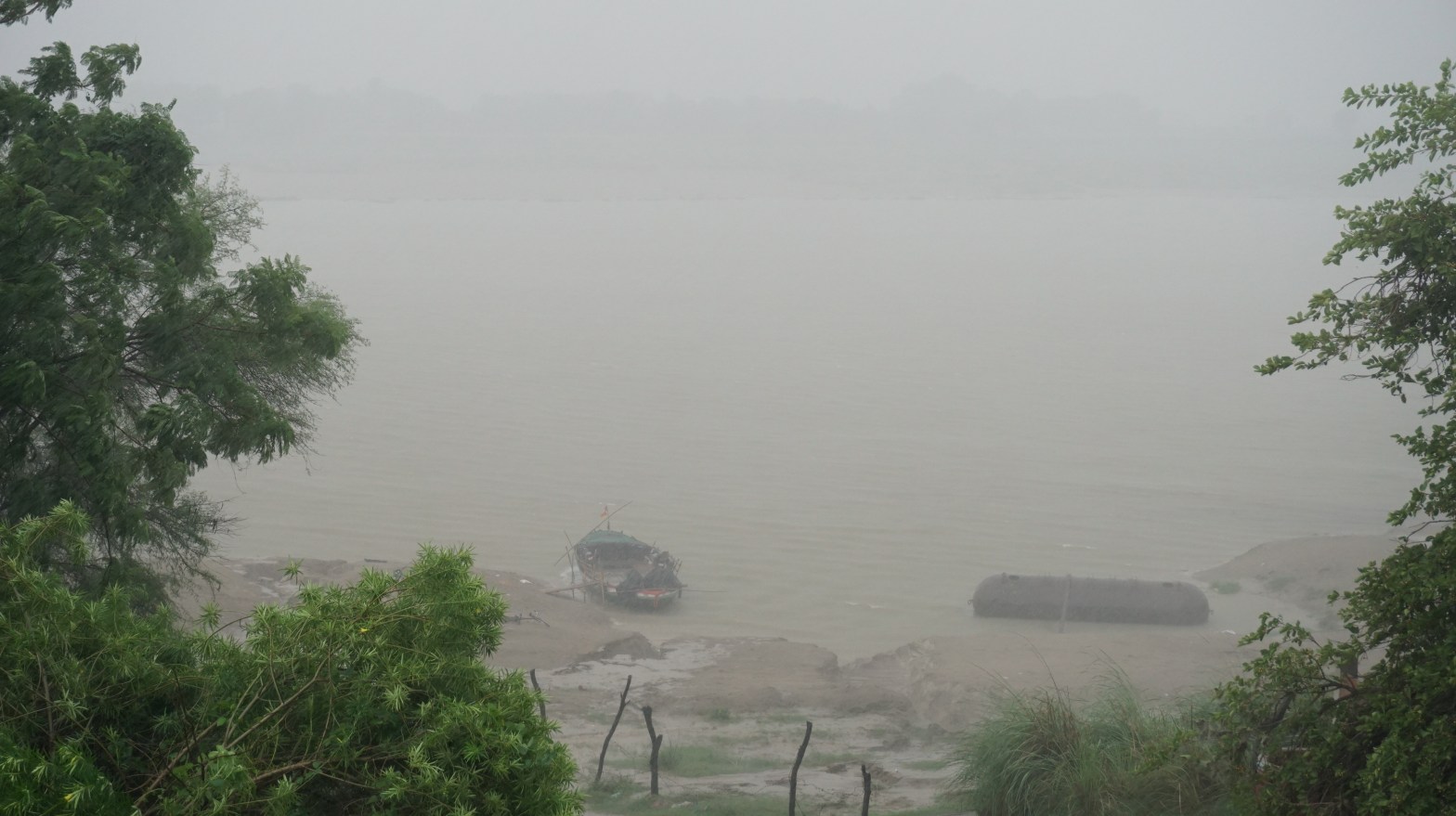
Sol = sun, sistere = to hold still. The day when Surya devata or the Sun God shines closest, longest, brightest in the Northern Hemisphere. It may be a great day for the sun in universal terms, but here, in our villages of Betawar-Chhitauni, the sun has not been glimpsed for days and is not visible this morning. An anxious perusal of the forecast reveals that there may be a few days of break from the persistent rains, which means that we might actually see the sun for those days. At present, the sky is grey and the wind is cool. The windows are closed and still one does not need the fan, let aside the cooler.
What does the appearance or disappearance of the sun mean for us?
With our ambitious planting programme, we needed the sun to bake our pits and trenches, now full of chopped straw, sand and mud, and cow urine, cow dung and water in an elixir-for-plants known as jivamrit. Since the sun vanished before its time, the trenches are soggy, but hopefully, retain their nutritious juices. We need the sun to dry up our cowdung so it can mix well with the soil for the remaining trenches. We needed, and need, the sun to plant our seedlings and saplings. Just water, and continuous drenching water at that, is sure to do them in.
We have a room where seeds are sprouting and being transplanted from smaller, darker places such as egg cartons and the folds of moist paper and cloth, to sunlit places in containers with rich soil. They are all yearning towards the light from the windows. We need to put them in a large, safe place where they could get shaded sun. For some days every place has been only too shaded. When sunlight is at a premium you long for it as the saplings do.
We need the sun to dry out our pathways. We are not able to access our ditches! We are not able to go to every corner of our land! We are stuck in the mud! A small drying out by the sun goes a long way.
The Summer Solstice is called Midsummer by some folks on other continents. One ‘folk’ was Shakespeare, who is as much ‘ours’ as ‘theirs,’ as many of us have always believed. We in India have acted parts of, quoted verses from, made allusions to, even been inspired by, A Midsummer Night’s Dream. At least, by Puck, and Oberon, and the ill-met-by-moonlight proud Titania.
The Midsummer Night’s fairies make me think of our own fairies in Shankar’s Fairies, shortly, we hope, to be completed. In that story too, the fairies come at night, but the house the story is set in comes to life with shafts of sunlight during the day. In scene after scene, the sun rises and the action begins.
And Puck brings me to another person from the wild conquering West who is also ours, Kipling. In his utterly delightful book, Puck of Pook’s Hill, he rhapsodises about the hills and dales and streams and vales of England. His evocative lands touch me in a way I am still waiting to be touched by the lands of Betawar and Chhitauni. Only because I grew up with England in my imagination and not village India.
The lovely, exciting task before us, then, is not only to grow a forest in our Ganga Vana, but to make children grow up with their imaginations touched by its beauty.
 gangavan.org