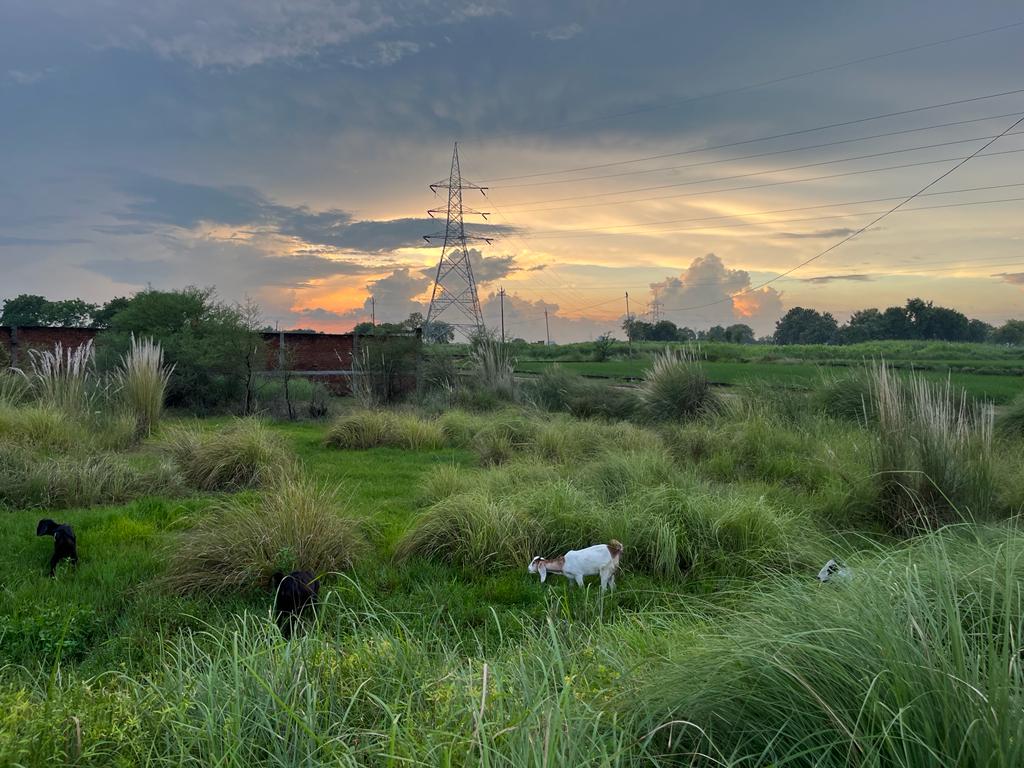
A forest will grow naturally.
This year’s World Economic Forum in Davos, Switzerland, called for the world to plant a trillion trees. Many commentators explain, however, that all you need for forestation is to let the land alone without further damage and the forest will grow back itself. Meanwhile, “….a new study shows that the potential for natural forest regrowth to absorb carbon from the atmosphere and fight climate change is far greater than has previously been estimated” (https://e360.yale.edu/features/natural-debate-do-forests-grow-better-with-our-help-or-without)
Children will grow naturally too. Yet we are all preoccupied with various approaches for the education, socialisation, and development of children. Or maybe we should be, and are not enough. In the case of forests, we cannot wait for hundreds of years on our own Gangavan for them to grow and so we interfere. We keep cutting back tall grasses, prickly wild trees, and undergrowth, or we would be buried under a Sleeping Beauty type jungle. While we thus remove, we keep digging trenches and pits, manuring and planting. Then we weed and water and cut back more undergrowth around, not in the trenches.
This past year, some of us were away for much of the year and immersed partly in the parallel activity of helping children grow. In April all will be back to the comparably easy work of planting and gardening (while the child-rearing carries on, and maybe the children become gardeners too). These are some of the plans:
To double the number of trenches and pits. Those first planted already showcase a hundred species anywhere from 4 to 10 feet high. No time to lose to forest the rest of the land!
To design more carefully towards the final landscape, which will have: three ponds, double lines of trees around the boundary, groves of specialized flower and fruit trees, walkways, observation spots, a rehearsal space and theatre studio, cottages, a common semi-outdoor meeting space.
To begin to use the land more regularly for classes, for farming, for experiments, for learning and interacting with. We will bring experts, children, teachers, villagers, families and all visitors interested. Whatever anyone wants to do, almost, could be done in Gangavan.
To develop an “Ecological Curriculum” that will include the five elements, vayu (wind), akash (space), jal (water), agni (fire), and Prithvi (earth) woven and interlinked together in just about every topic in the subject areas of Languages, Mathematics, Social Studies and the Sciences. An artwork outside our campus depicts the elements with the shloka:
छिति जल पावक गगन समीरा। पंच रचित अति अधम सरीरा।। (Chiti, Jal, Pavak, Gagan, Samira – Panch Rachit Ati Adham Shareera. In slightly different words: our bodies are made of the five elements of earth, water, fire, space, and air.)
There is no limit to the usefulness of ‘ecologising’ our learning. We will interact with villagers, learning from them and teaching them through our questions and experiments. We will learn to care for our environment, our trees and animals, our earth and water, not just on special days but all the time. We will be happy creatures in the outdoors much of the day, playing while we learn, learning while we play. And because the elements are in fact intractable and complex, we will learn problem-solving at each step. Plant seeds? How do you access enough cowdung and urine to make enough organic manure? Seeds coming up—how to ward off the porcupines and peacocks, such lovely animals but busy nibbling? Saplings a sizeable height—how to deal with rabbits and mice? After that, the nil gai (our own Boselaphus tragocamelus antelopes?) How to dam up the excess water in the monsoons, the frosts in winter, and the scorching sun in summer? How to tackle soil erosion??
Gangavan, the original classroom, laboratory, and Garden of Eden.
 gangavan.org