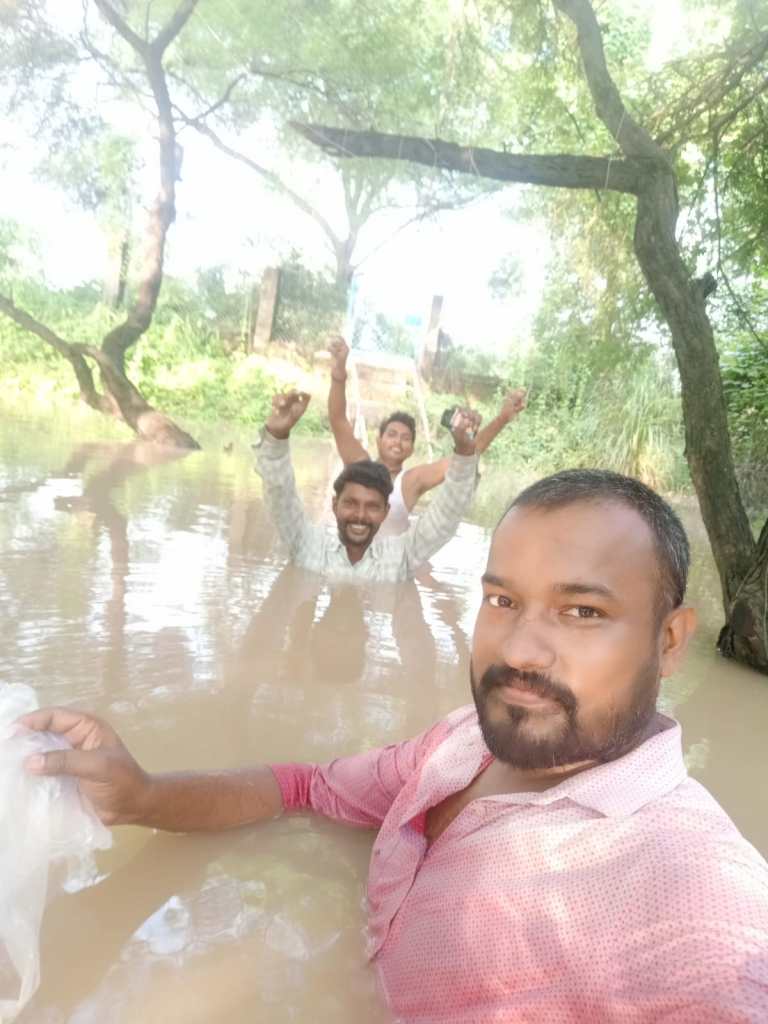
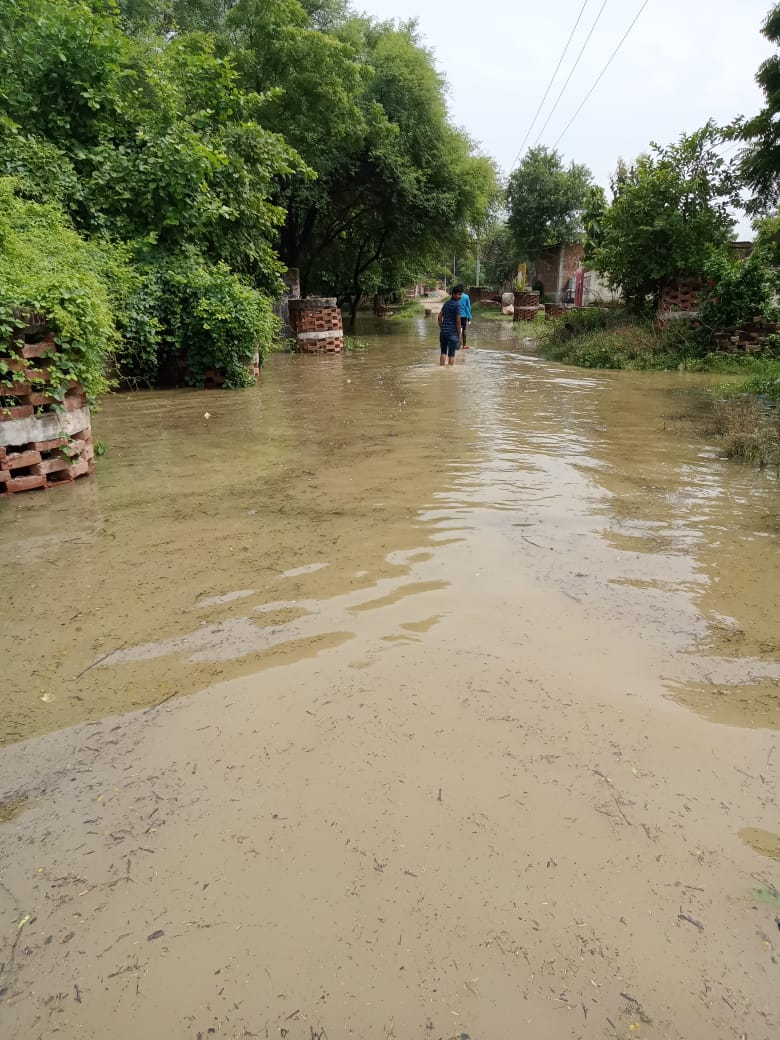
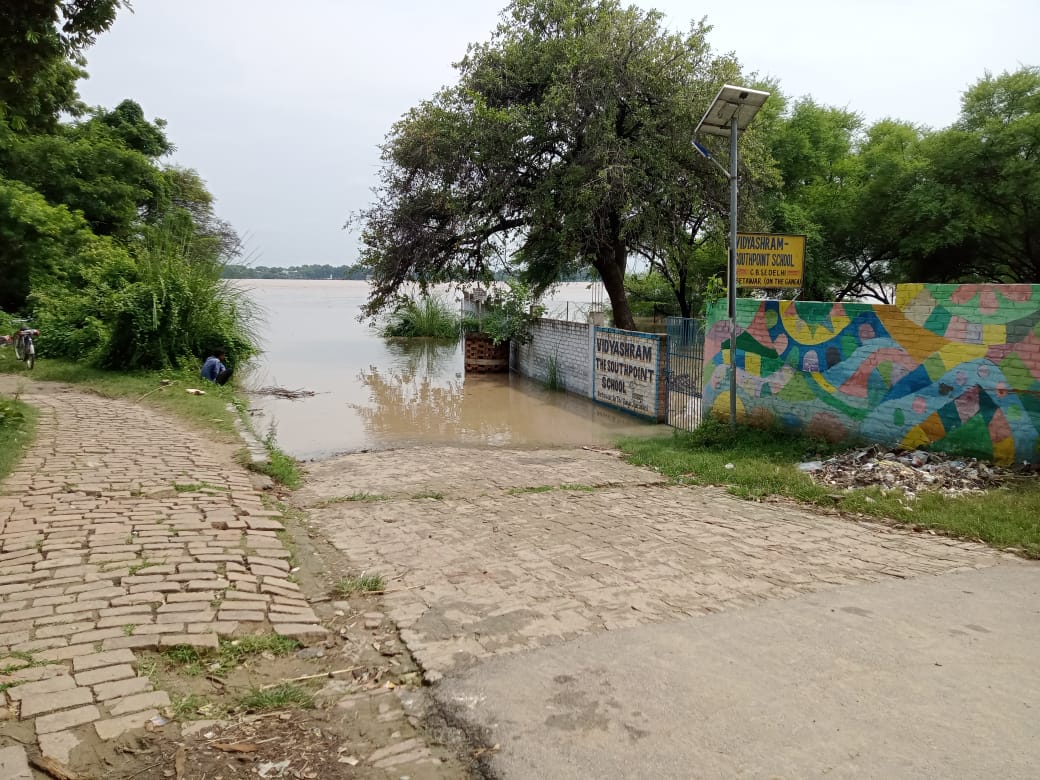
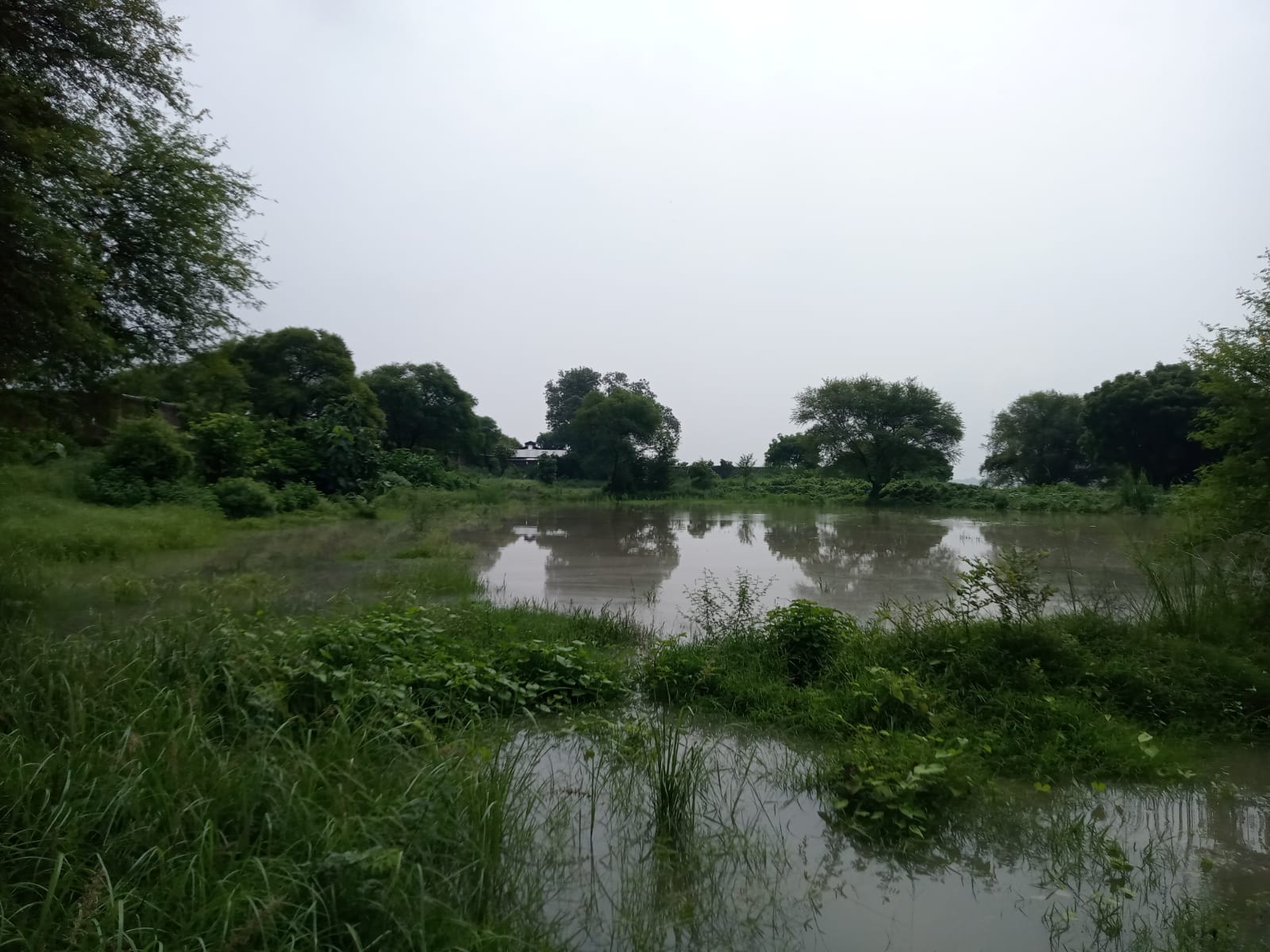
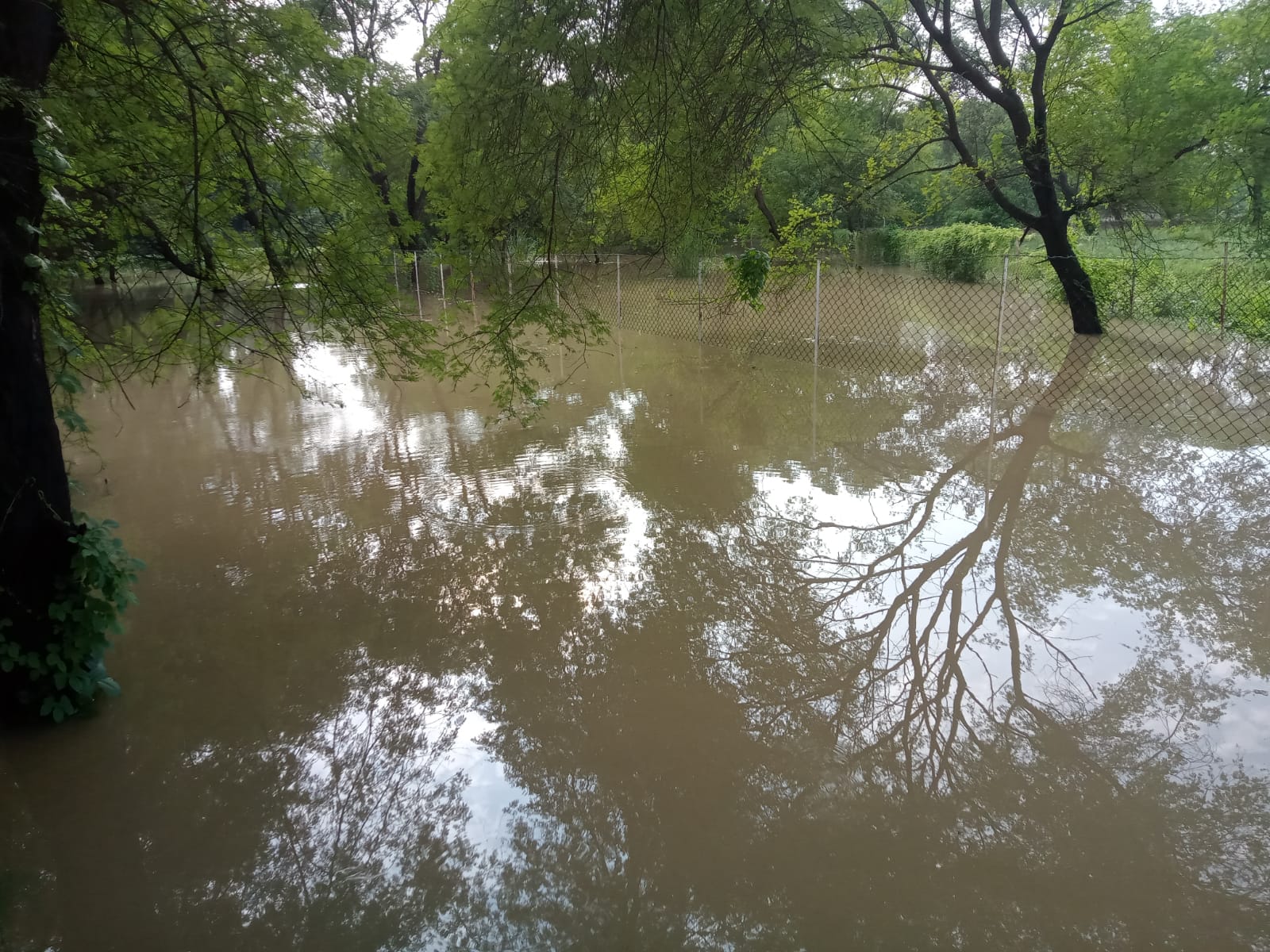
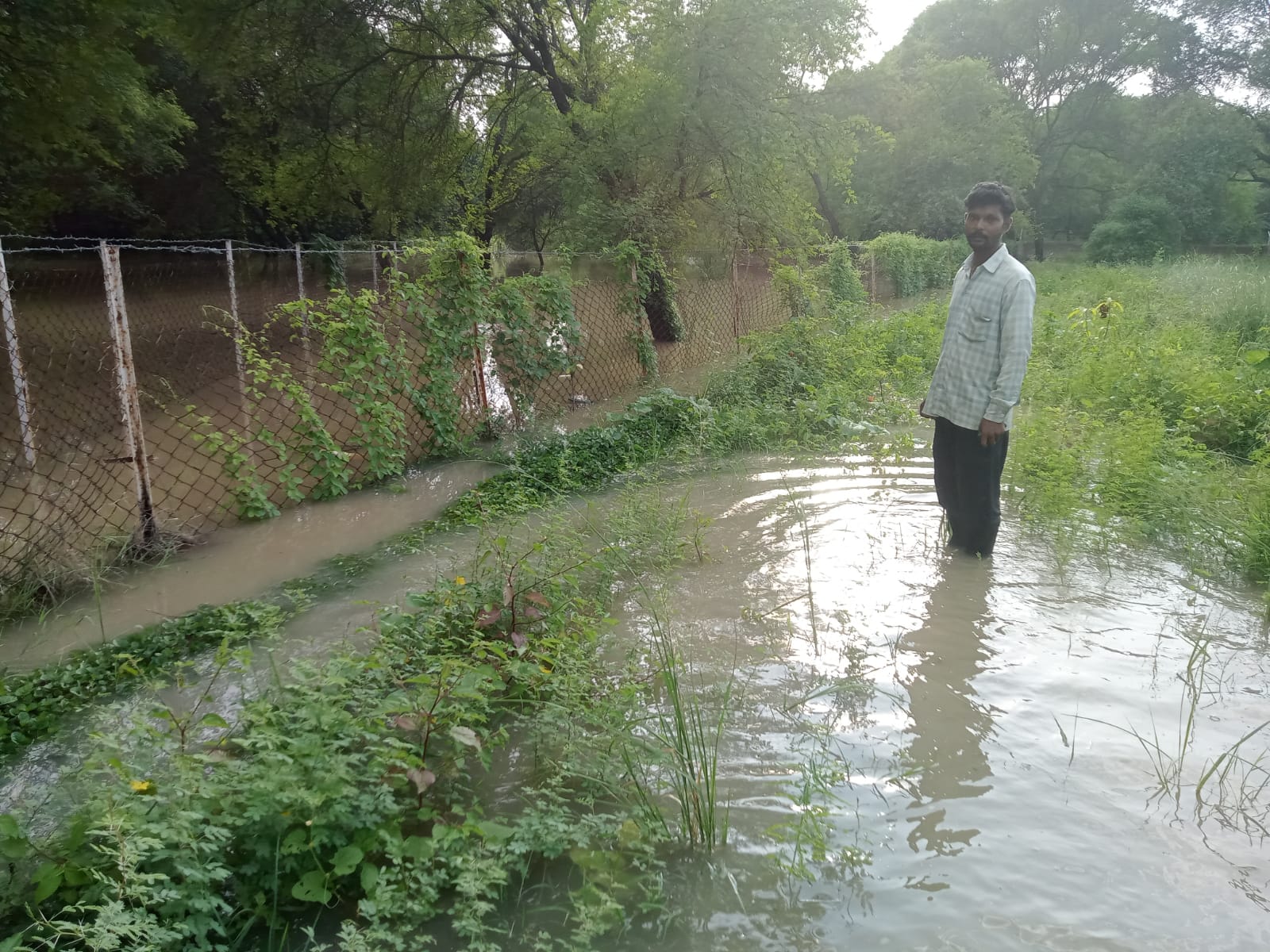
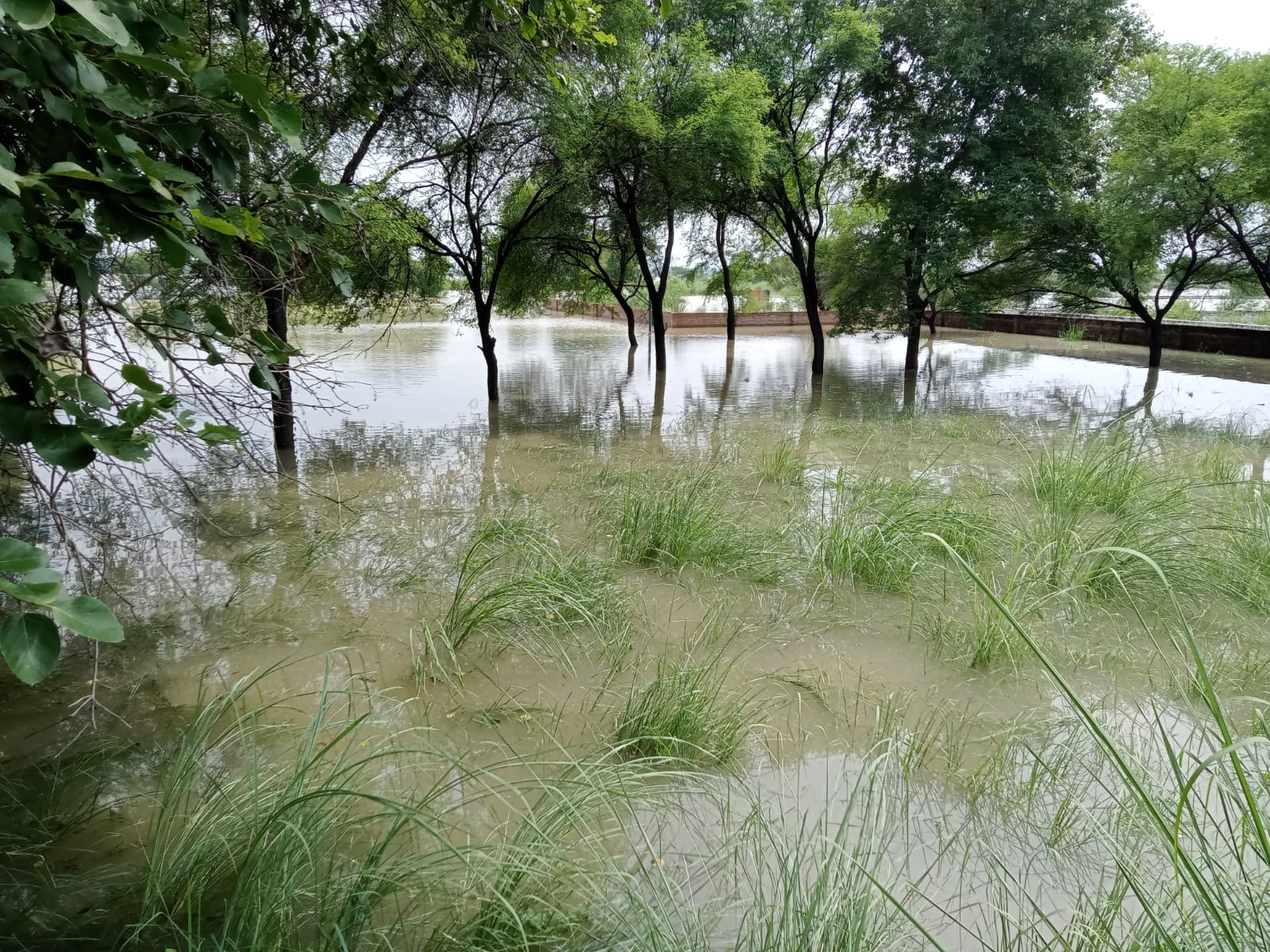
We are flooded out again and are quite concerned. What used to be an occasional and unusual phenomenon seems to have become an annual one, and the severity seems to be increasing. Most of our fields, in all directions, including those which NEVER were flooded before, are under water. Those that are not are inaccessible: our main building is completely cut off from the rest of the village because of flooding there.
Once the water recedes, it is hard to remember as vividly, and we get occupied with our regular activities. But this year, we will have to figure out how to address this. And we still have to determine the damage to our saplings, and to our walls.
In the meantime, we might as well enjoy witnessing nature’s might!
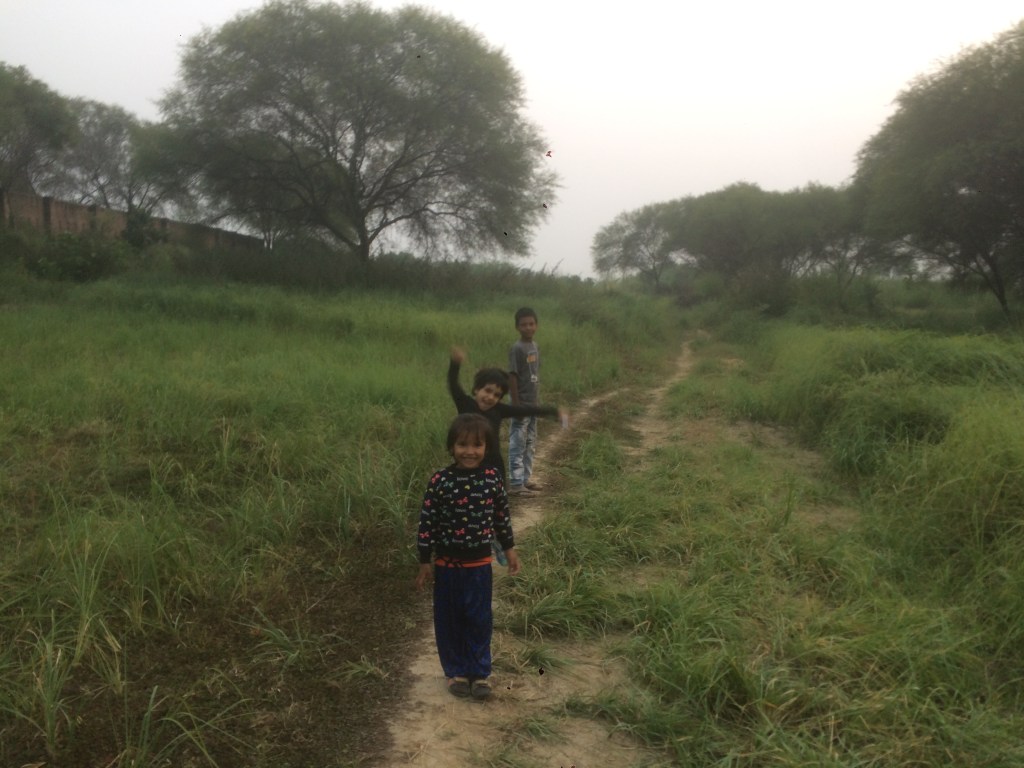
(below) Sunil, Aman, and Ravi standing on our bamboo bridge! (further below) Scenes from our fields and the village during the flooding
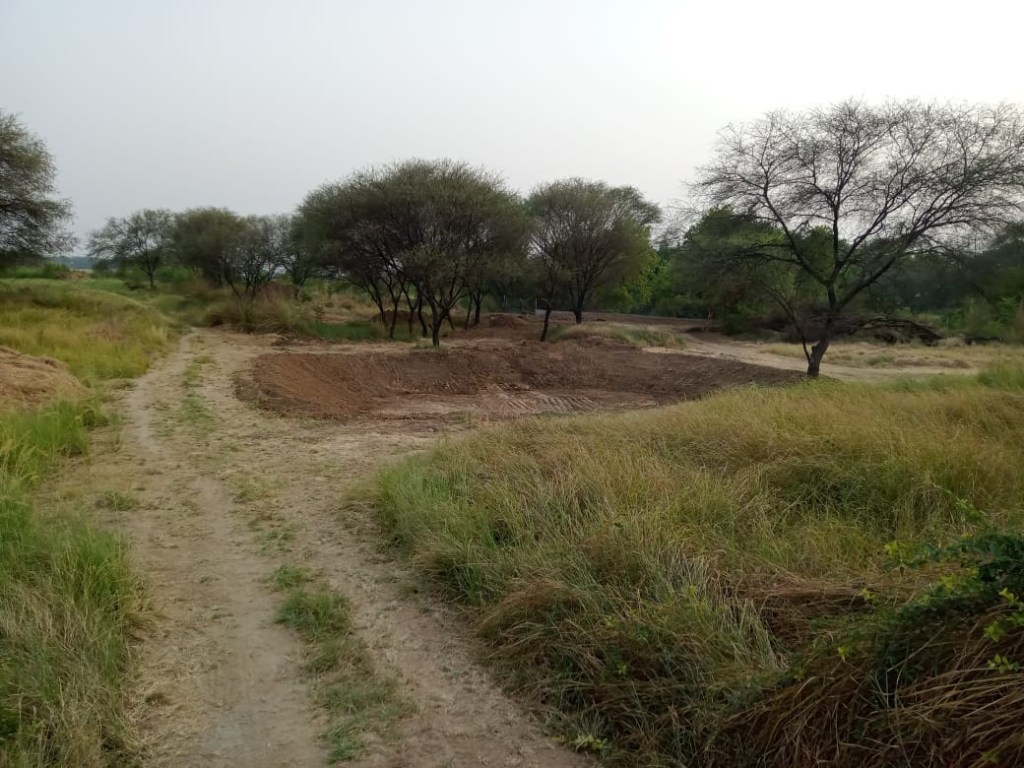
We have finally dug our first pond! We plan to have perhaps two or three of different sizes, and channels connecting each part of the land to one or the other. It’s been a daunting idea, but here’s the first one!
We’ll do more shaping and landscaping, including adding stones etc, after this monsoon, once we observe its behaviour. We’re not sure how long water will stay after it collects, for instance, and other such important phenomena.
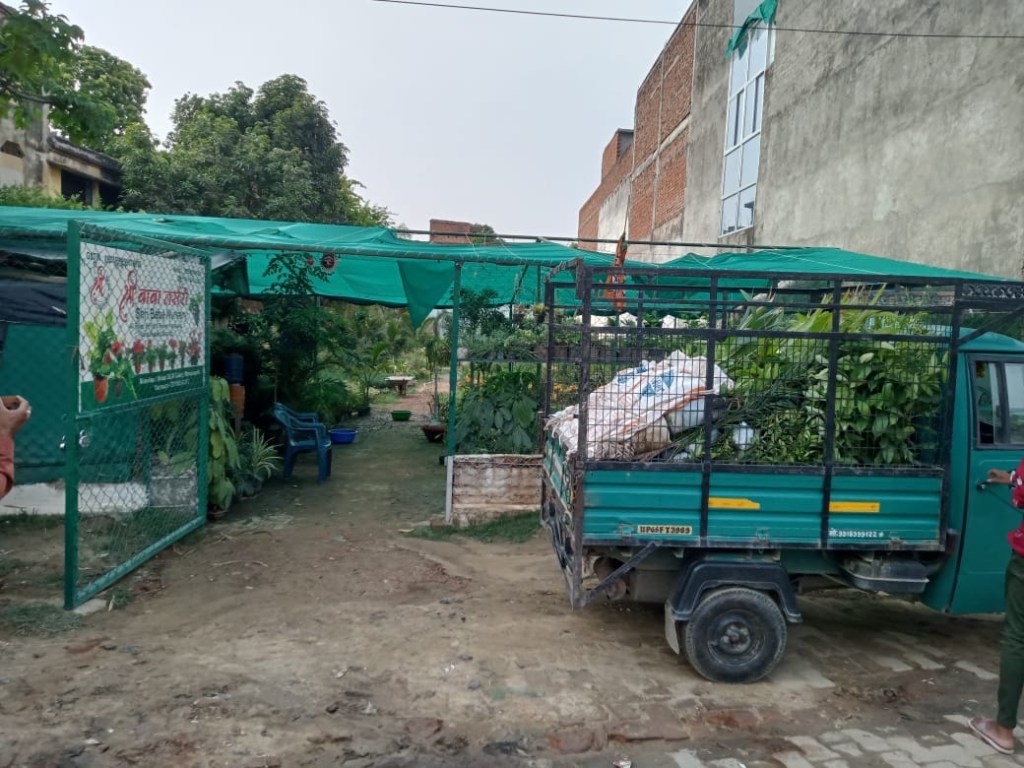
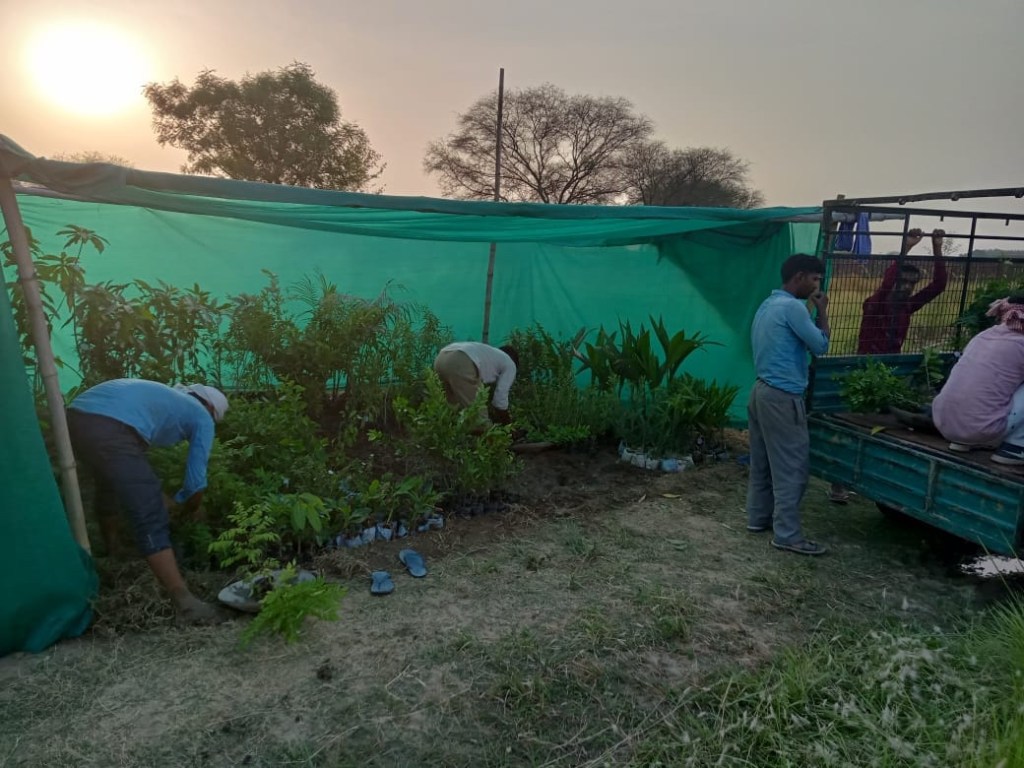
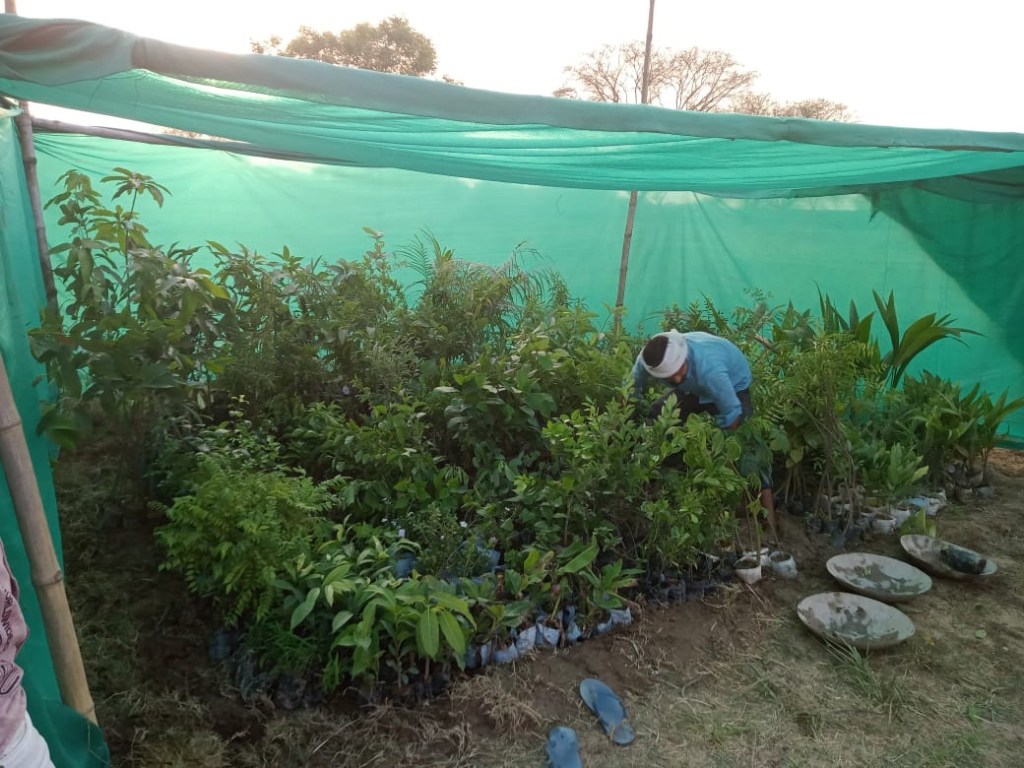
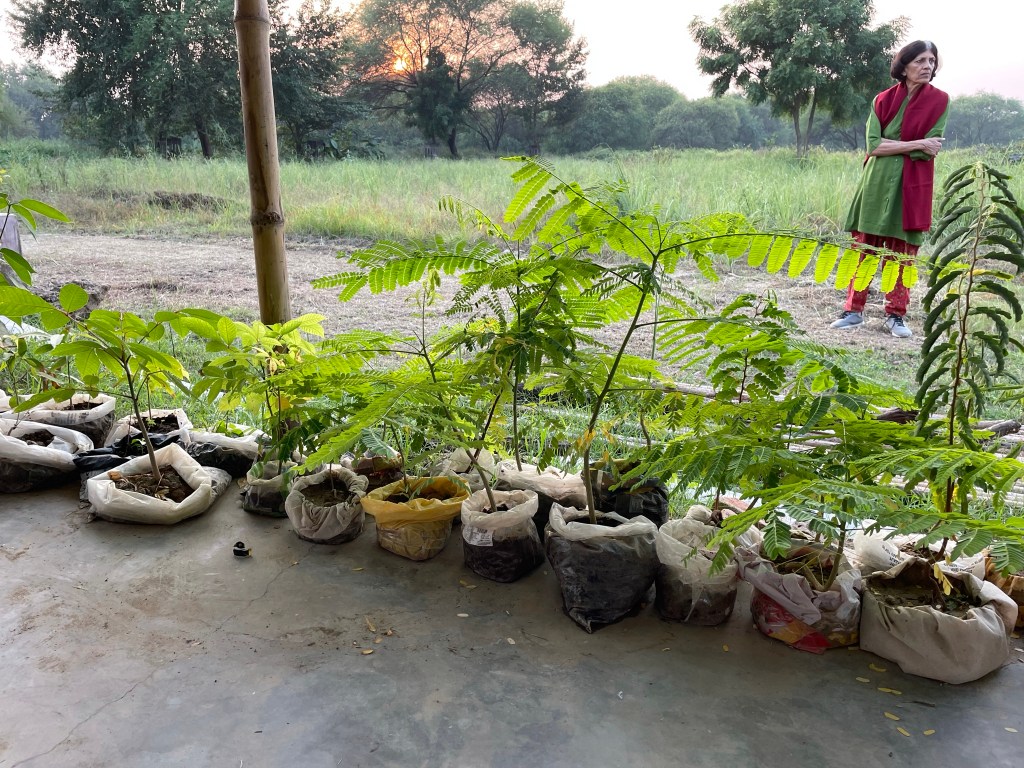
We have finally purchased our last (for this year) major batch of trees. 750 native plants for the trenches and a wide variety of fruit trees, both from seed and grafted.
The heat is building up and we’ve had a couple of dust storms and very minor showers. We want to get these in before the monsoons begin, probably in a few weeks.
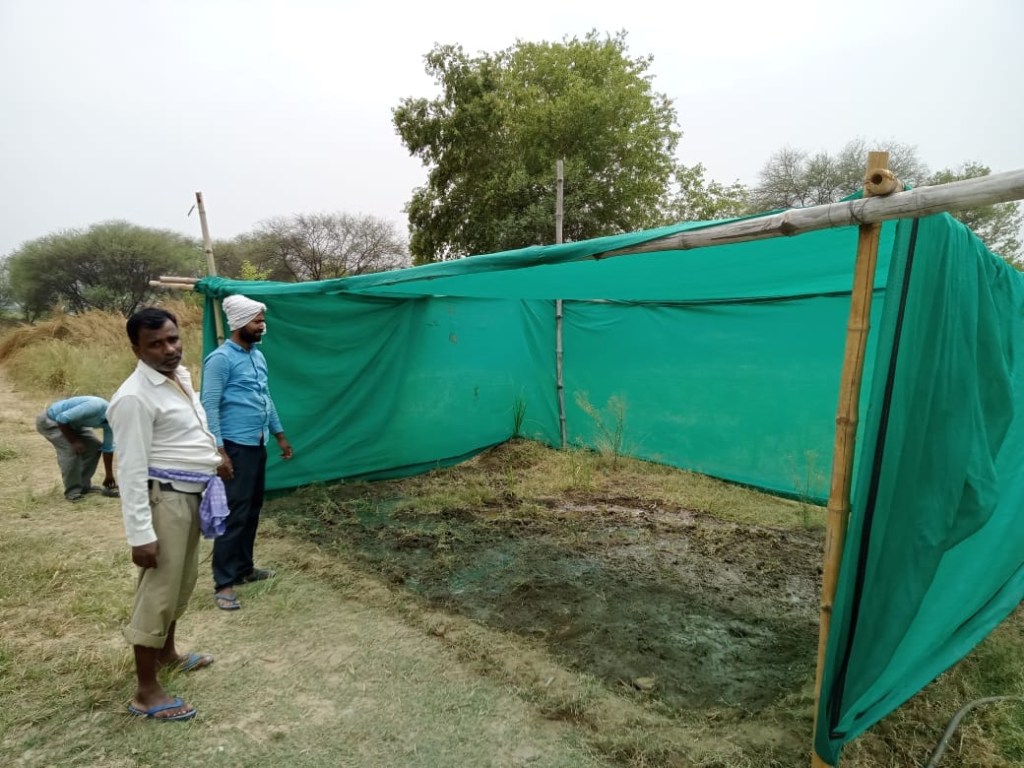
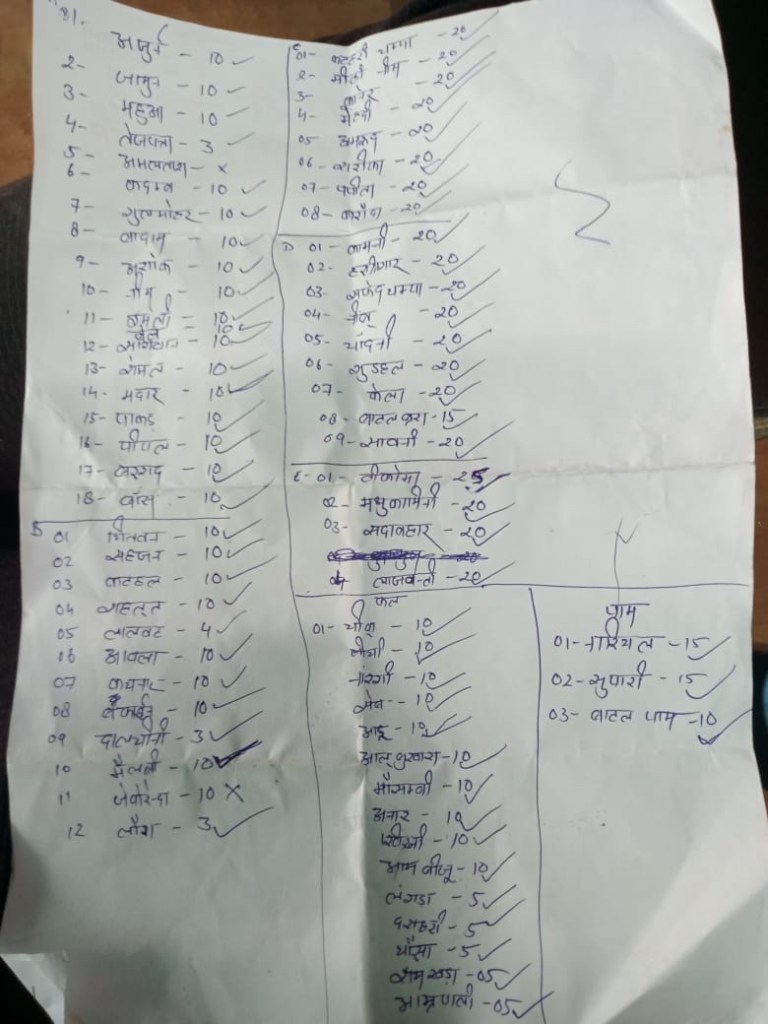
Shaded nursery ready!Final listUnloading Waiting to be tagged, sorted, and planted!
This time, we are finally going to plant in two sections of land where we want to have lots of fruits, spices, and some special non-native trees. Making the list was a little like writing a letter to Santa Claus (I imagine! 😄).
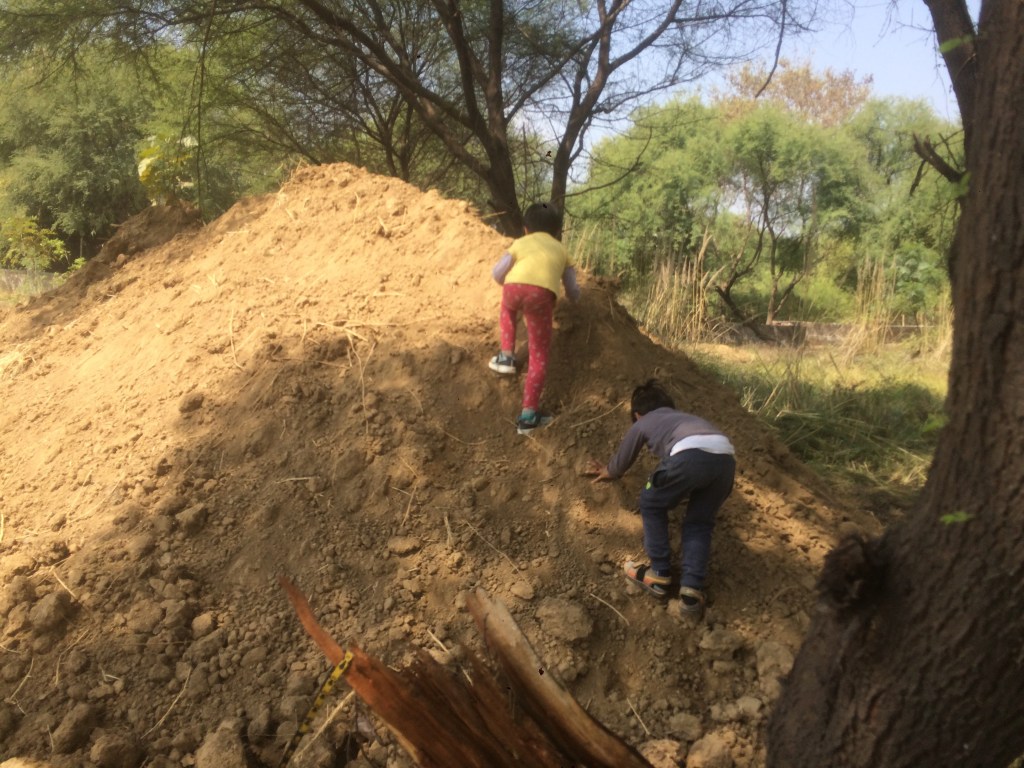
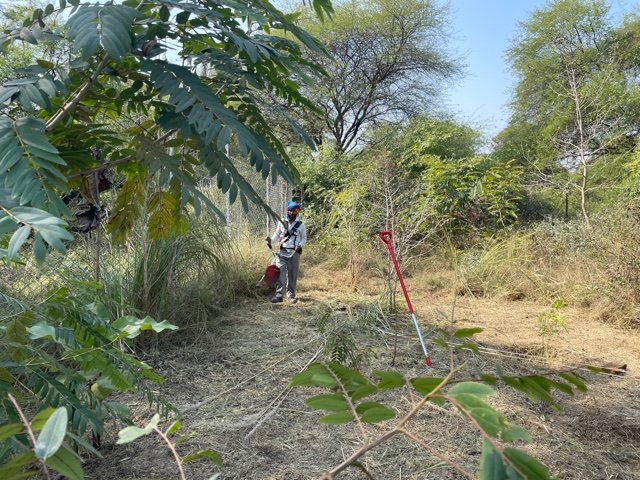
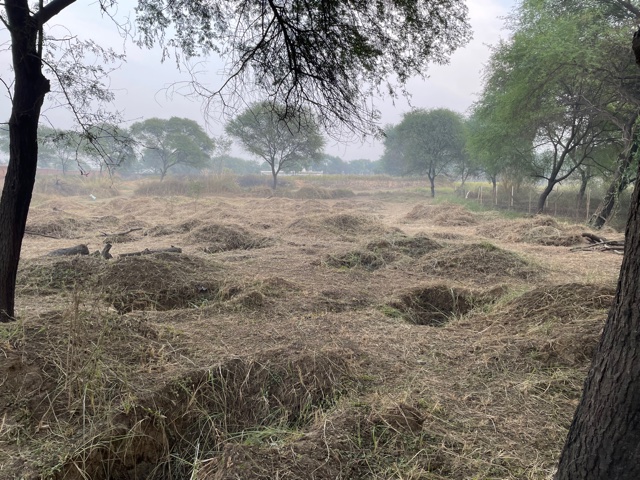
The last two months have mainly been a daily slog to do these two things. Sunil works for a few hours with the grass cutter to reclaim meter after square meter of land from the wild flood-jungle it had become. And we have had the JCB digger in again to make the compost mix and fill the remaining trenches and pits, some of which had to be deepened.
We’re trying to get an engineer to come in and advise us on the pond and rainwater harvesting tanks we want to build. Those will give us the mud we need to finish filling to area next to the dam, which has been raised. The top layer will be the compost mix so that we can plant all along the nala. Everything depends on something else.
We’re also rebuilding a couple of walls which fell down in the floods. Somehow, it always seems like a race to get everything done in time before the monsoons strike again!
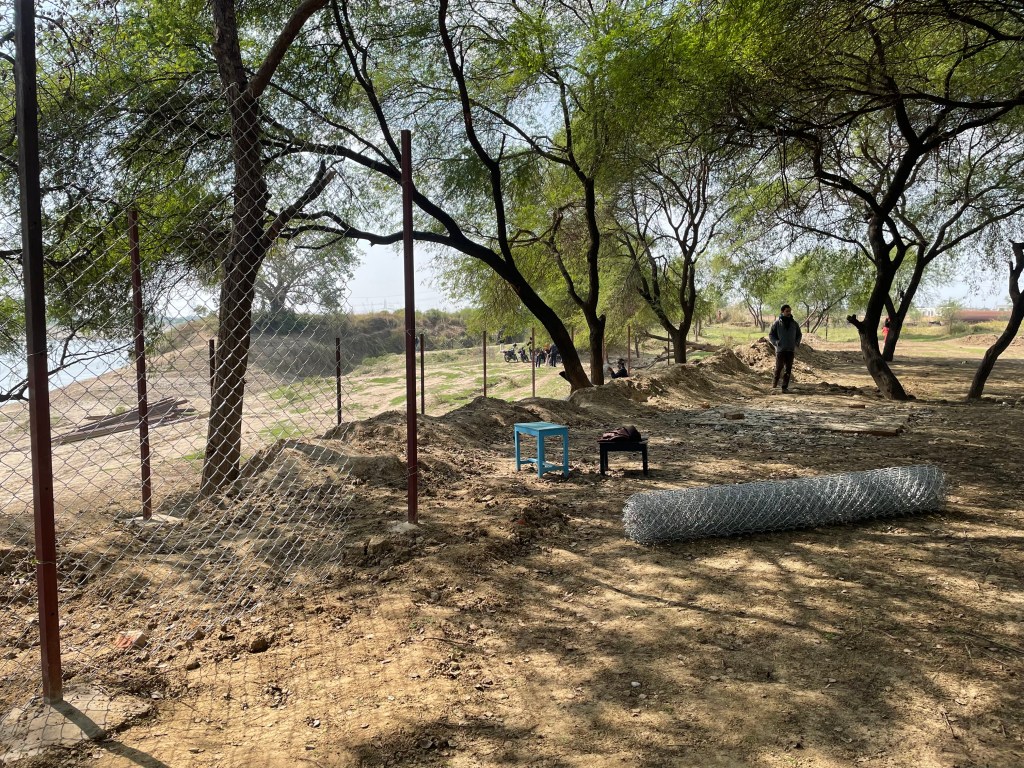
Along the riverside, we have a low (3-4 ft) wall with a four foot wire netting. For the most part, it feels secure, though we are planning to raise the netting in a few places where it has been breached by nilgai (Boselaphus tragocamelus – Asian antelope; very common in these parts).
During the floods, this wall + netting of about eight feet is completely submerged in water. This has happened now for about four years. But the wall has stood, unlike some others on the side of the canal. There are a few cracks, but it seems quite stable. We inspected it a few weeks ago, discussing possible reasons, and suddenly I had an insight. Following the topography of the land, we had built a curvaceous wall, trying to include higher ground and curve in where there were dips. Later, looking at the resulting structure, we felt we had been self-indulgent, because, obviously, a straight wall would have saved on materials and labour, though this looks infinitely better. But curves are stable, right?
Doing some ‘research,’ I realized that our design is very possibly the reason for the wall’s stability. I discovered ‘crickle-crankle walls’ in England – a Dutch engineering invention – where walls were deliberately built in a wavy, sinusoidal manner in order to save on materials. So, although we seems to keep putting aesthetics over practicality, maybe we did something right this time!
It’s nearly impossible to walk near the wall right now because of the monsoon growth, but as soon as it is cleared, I will post some pictures of our very own crinkle-crankle wall!
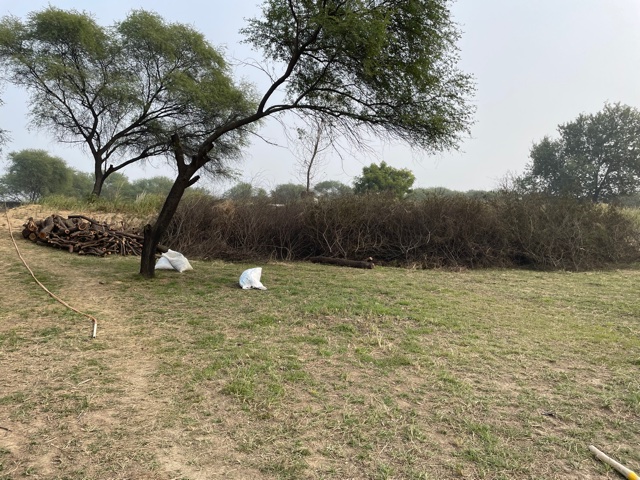
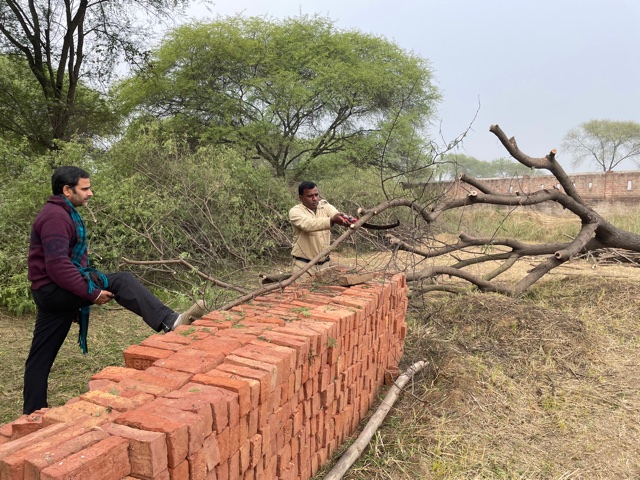
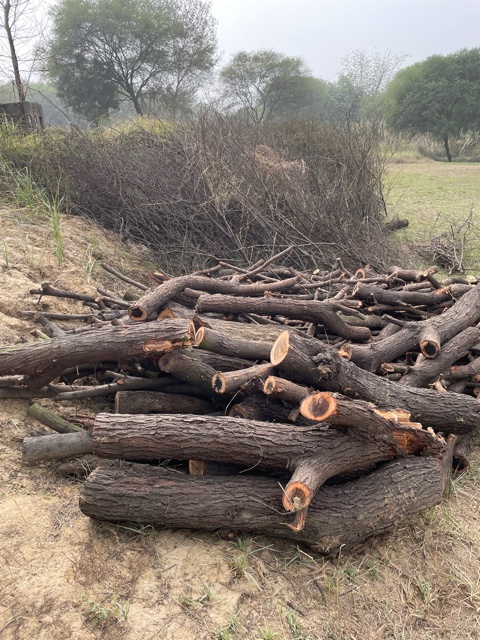
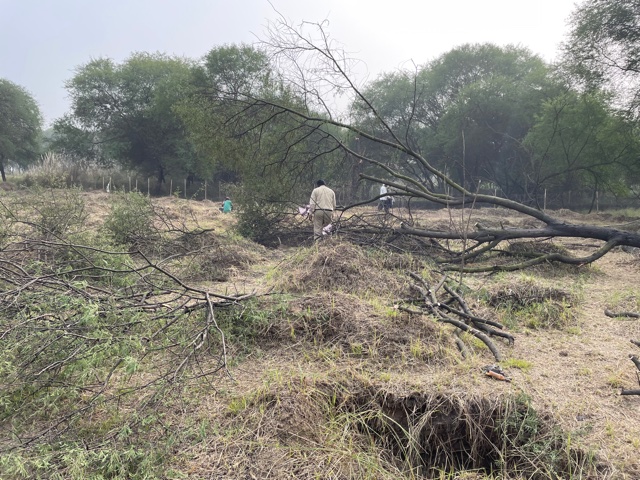
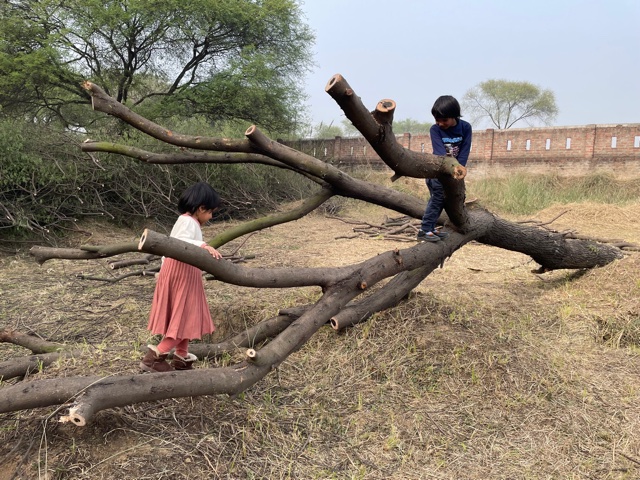
We have started thinning out the babul trees (Vachellia nilotica or gum arabic trees) on our land. They grew on their own, and really took over the landscape, which we have been very thankful for these past few years when we didn’t have our own trees. But now it is time to select, prune, and chop. Some are quite mature, and we are dreaming of the things we can make with the wood once we can get it over to a sawmill. Babul is a hardwood, and though it needs good treatment, the grain is supposed to be very beautiful. It’s naturally termite resistant and good for furniture, construction, agricultural implements, and more. And, we are planning to save a few trees for playground use. Exciting!!
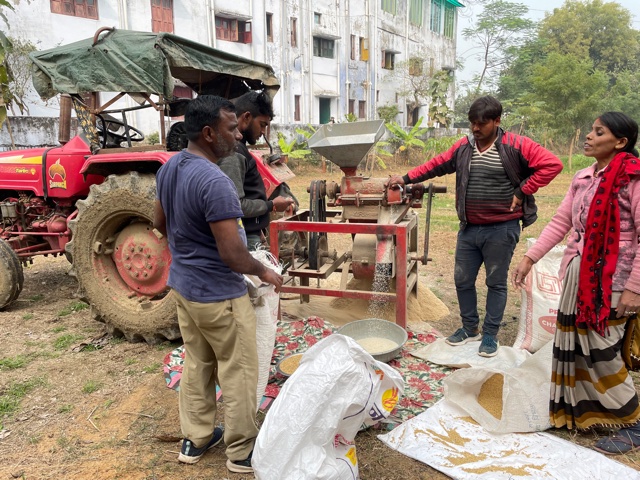
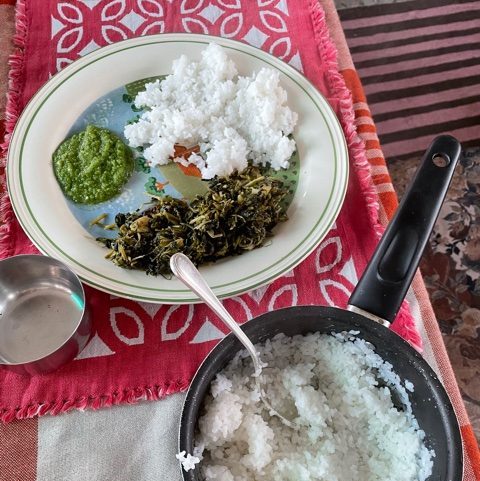
We finally managed to get our rice milled. Locally, however, this is done with a single machine, and the product is white rice. We are not sure how to get brown rice yet, with the technology available in our area. More research is needed. But the rice we did produce is pretty tasty!
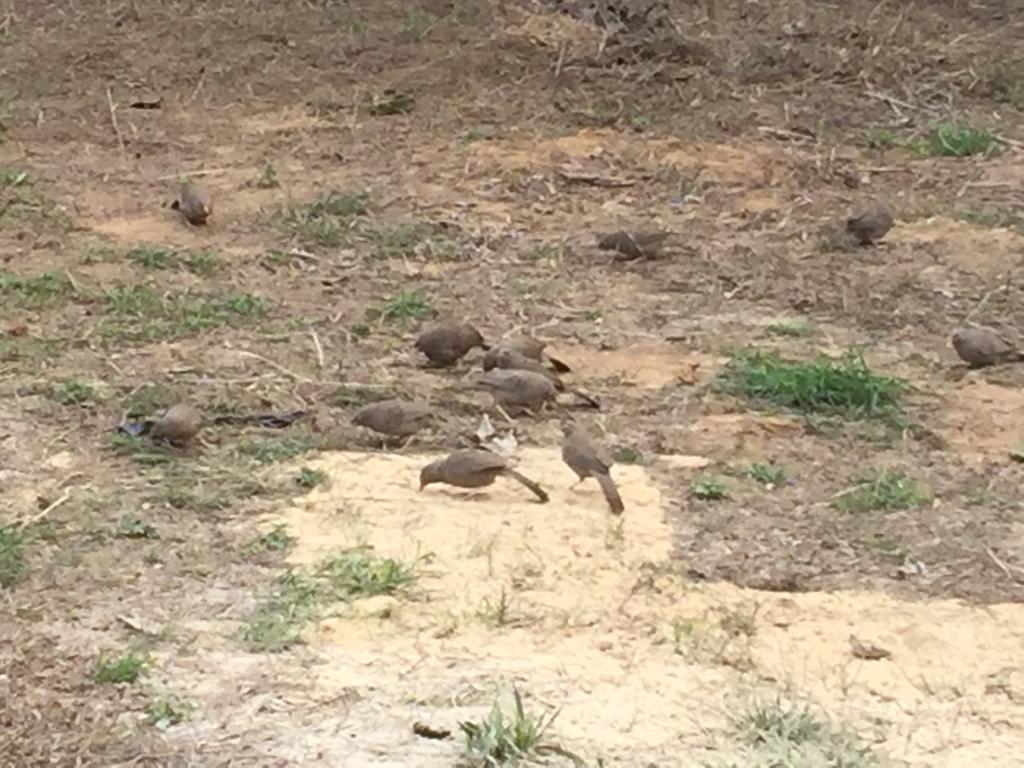
(above) Birds enjoy the fallen husk after the milling.
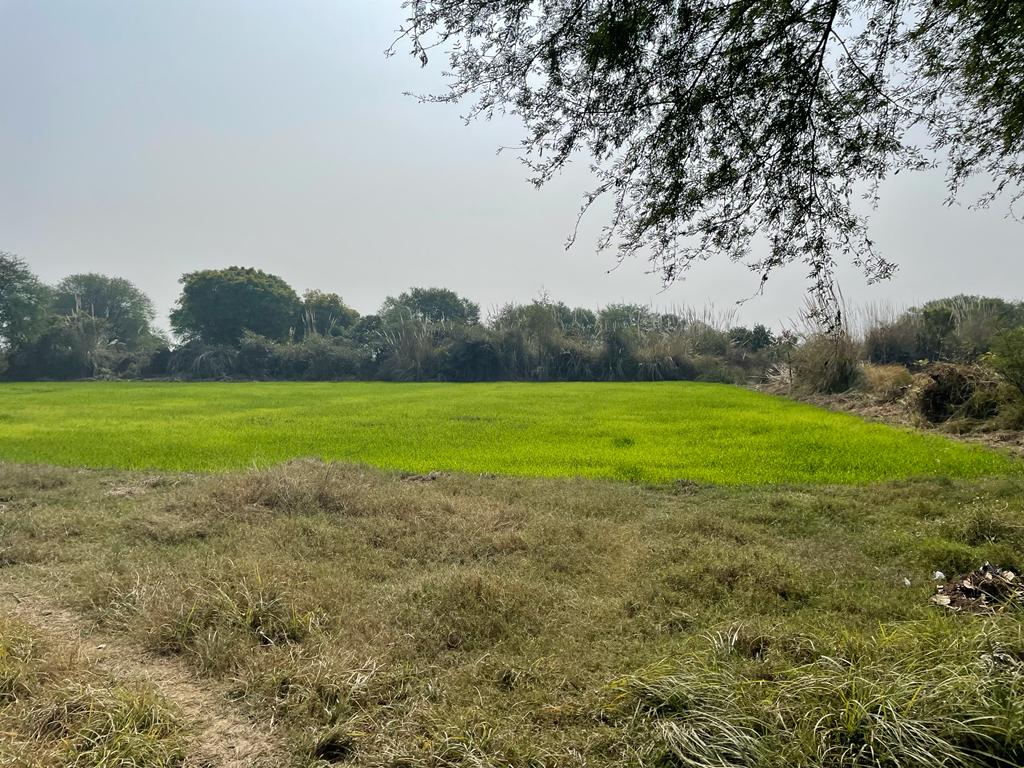
(right) The wheat is coming up! Such a lovely green. This season’s vegetables are overwhelming us: eggplant, cauliflower, beans, tomatoes, and a variety of lettuces and other salad greens. The carrots, horseradish, potatoes, and onions are soon to make an appearance!
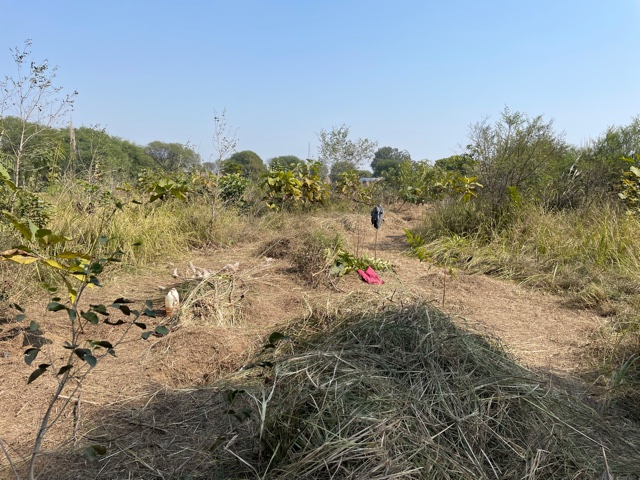
(below) We are making good progress in taming the jungle, with Sunil cutting grass for a few hours a day. We can actually see the surface of parts of the land that have been hidden for months! The next step will be to fill all the pits and trenches and do the next step of tree-planting. We also have to finish tackling the mud-shifting and rainwater harvesting in preparation for this year’s monsoon. More on all of this soon!
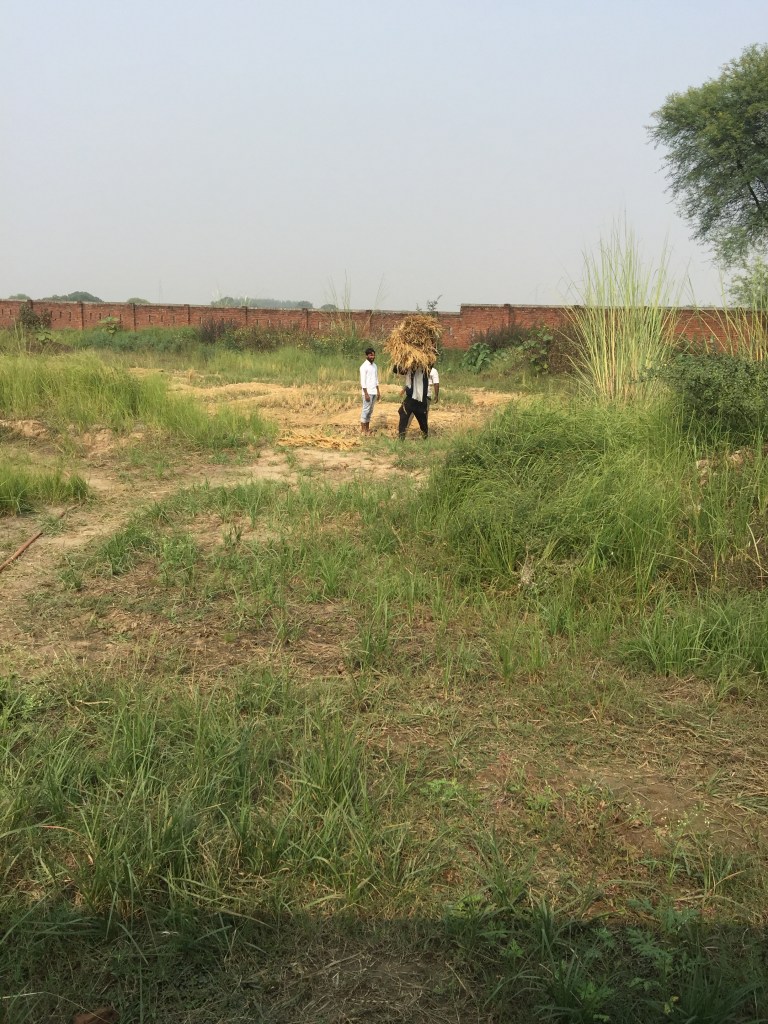
We’ve mostly been trying to get things back in hand after the monsoons, which were overwhelming, and then trying to harvest the rice and get in the winter farming crops in time. The whole village is doing the same, but with a calm and collected attitude. We are such amateurs in comparison!
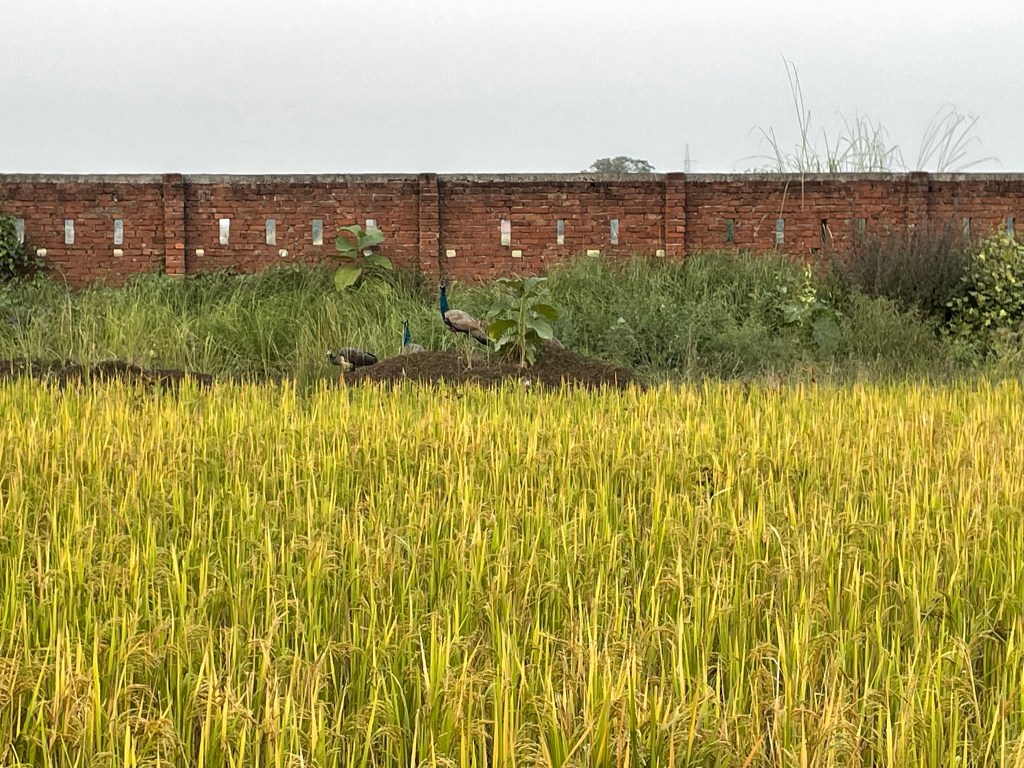
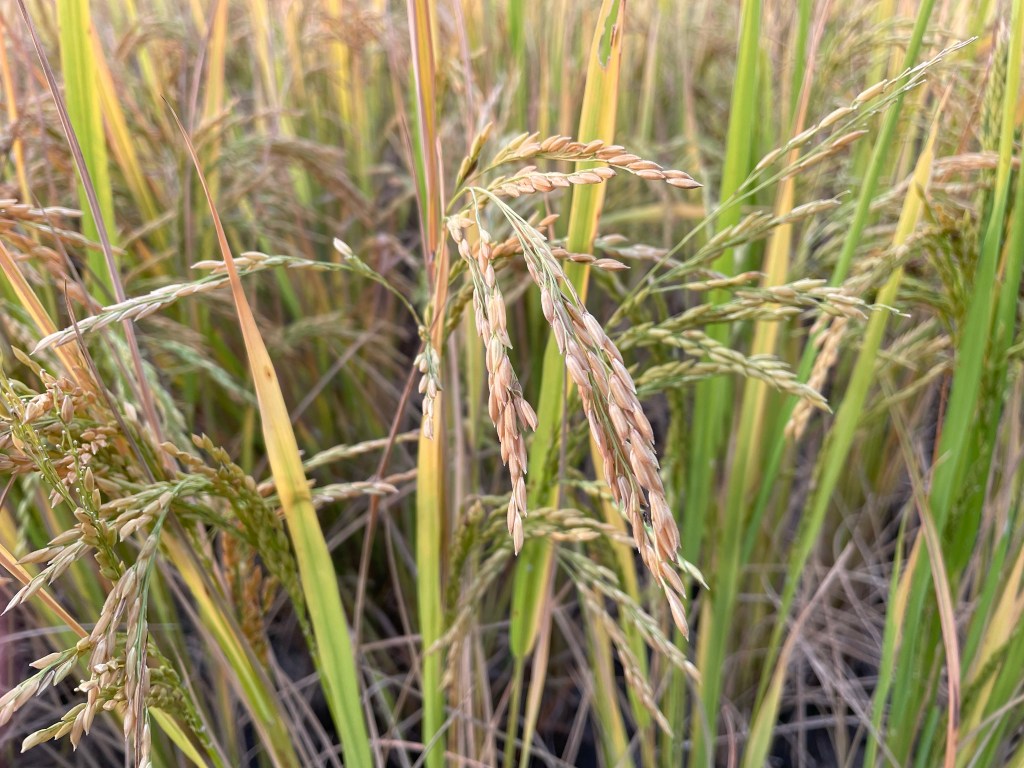
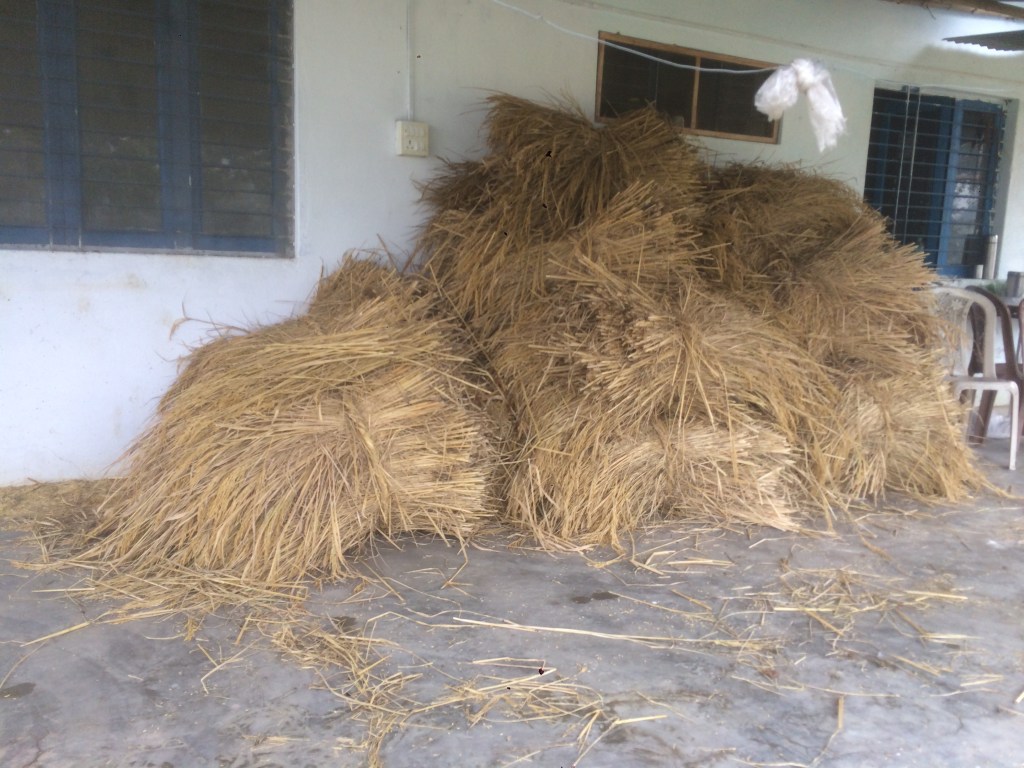
Here’s our rice: being watched over by peacocks as it was ripening at the beginning of the month, and (below) freshly cut a few days ago and waiting to be threshed. We’re hoping for 4 or 5 quintals, but let’s see! We’re also looking forward to tasting our own organic brown rice!
Our biggest triumph–though perhaps too early to say–are the trenches!
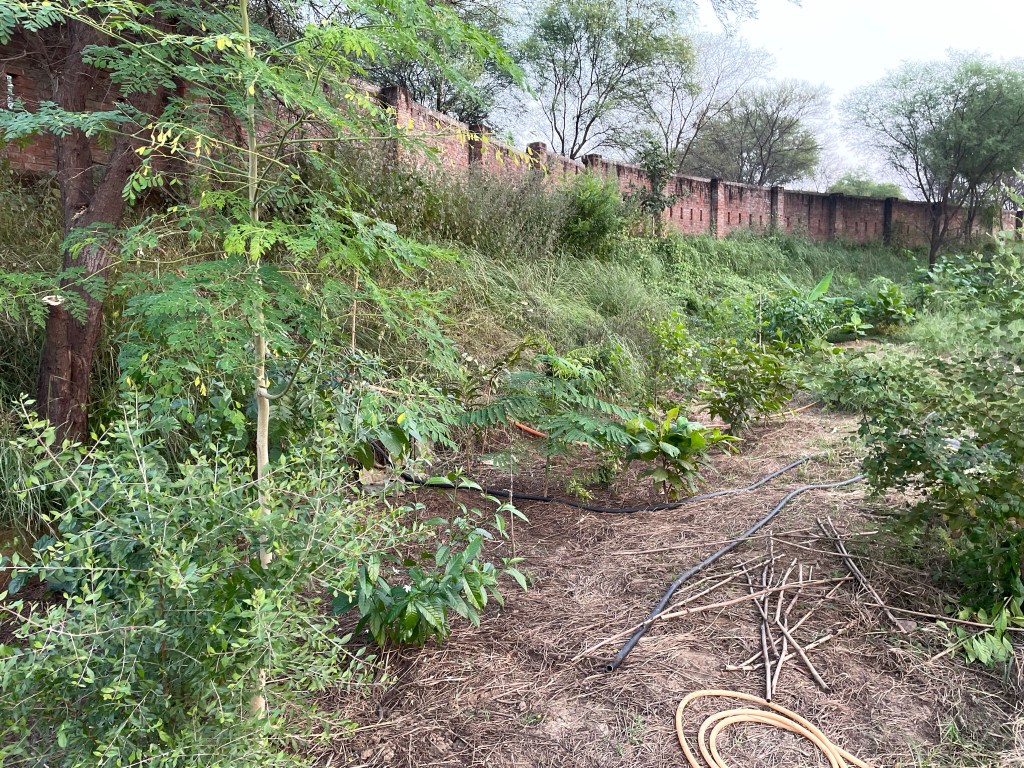
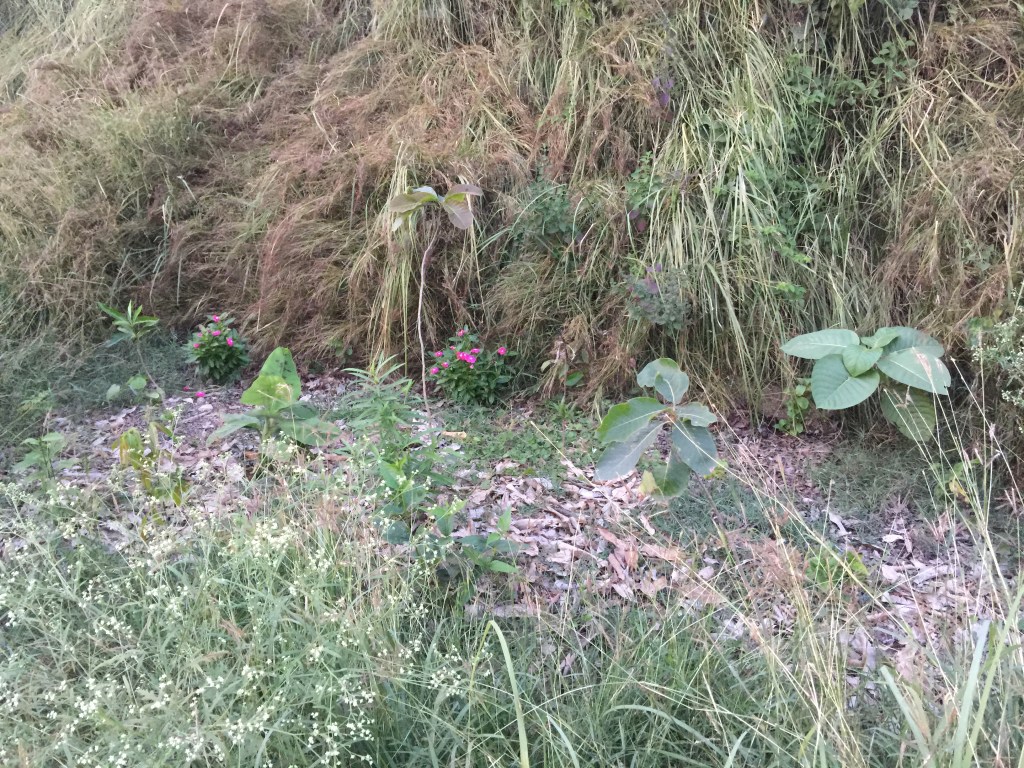
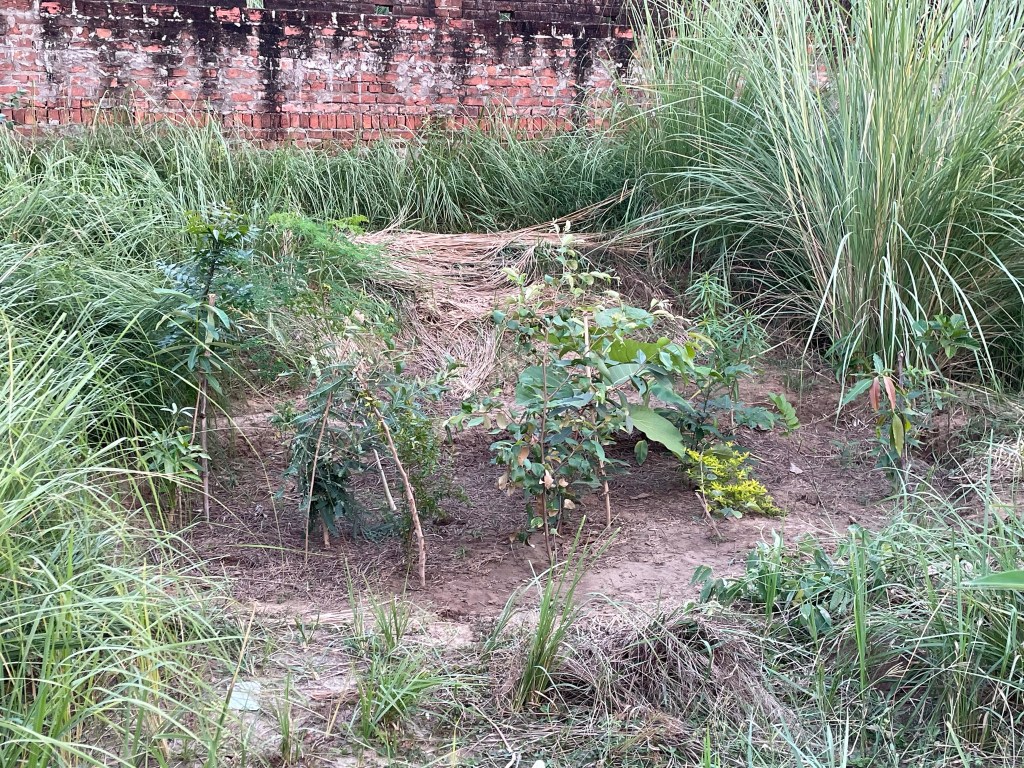
These are trees we planted in July and August, so, barely four months old. The one on the left is sehjan (moringa, or drumstick), and is almost eight feet tall! It’s one of the fastest growing, of course. But the kadambas and bananas are shooting up too. Our anar (pomegranate) plants have flowers, and to see the bay leaf saplings become stronger is beyond exciting. We will definitely have some things to harvest in a year or two.
(Left) The most recent trenches, with little plants. (Right) Trenches planted in August. The pictures could be clearer, but you get the idea. We are thrilled and in love; it’s hard to express how much.
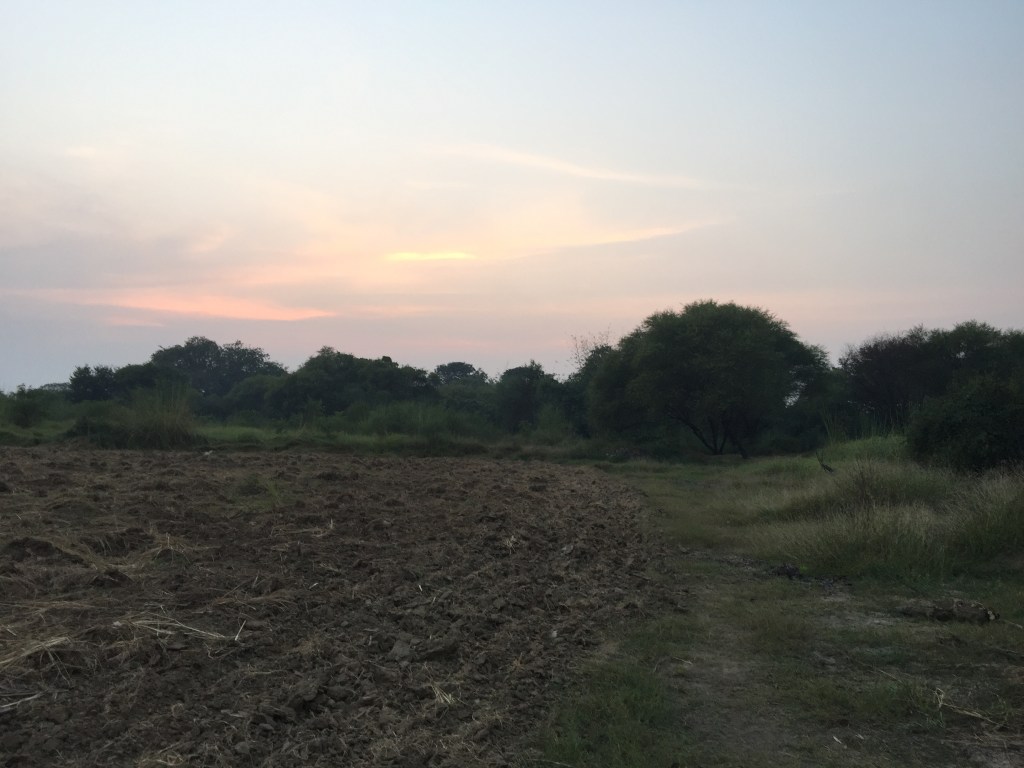
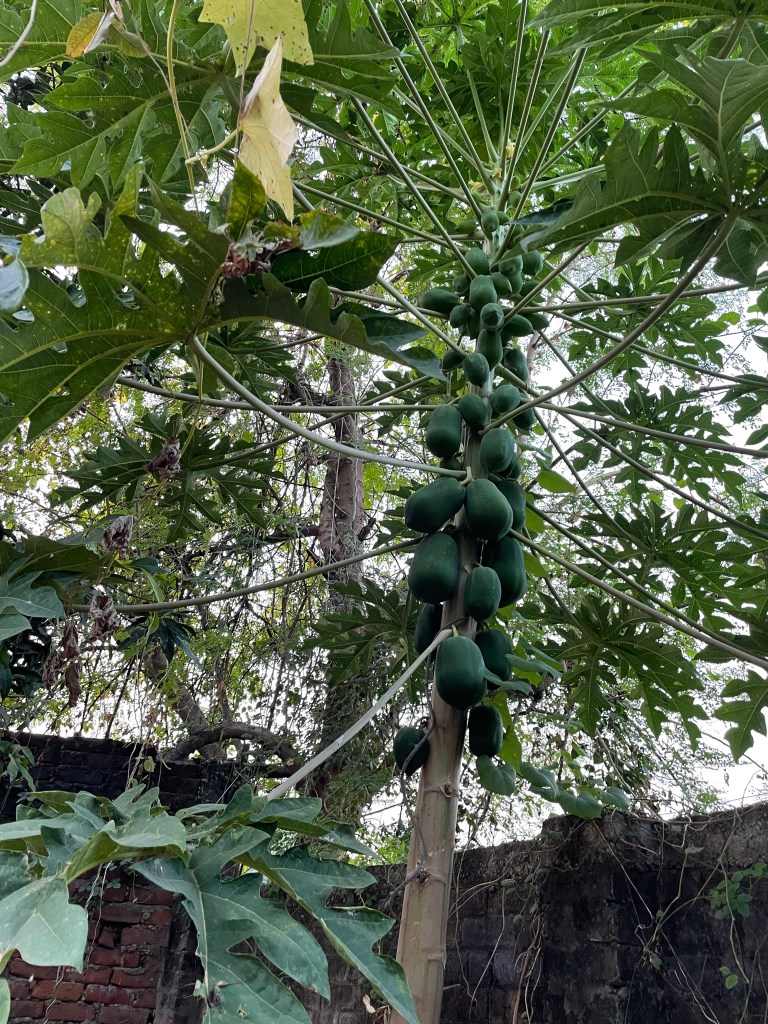
(below clockwise) Others enjoying the trees; our seedlings ready to plant in the ground now (gulmohar, imli, and litchi); freshly plowed field waiting for lentils; first harvest of papita almost ready on our other plot – just a few months old!!
This year, we have learnt the joy of eating mainly the vegetables we produce, supplemented with a few from the market for variety. Early in the year, we were inundated with muli (white radish), salad greens, carrots, and cauliflower. Then we ate bhindi (okra), kohra (pumpkin), beans, and karela (bitter gourd) all through the summer and monsoons. We have started enjoying baigan (eggplant) for almost every meal, and are waiting for more. It definitely teaches you to experiment with new recipes!
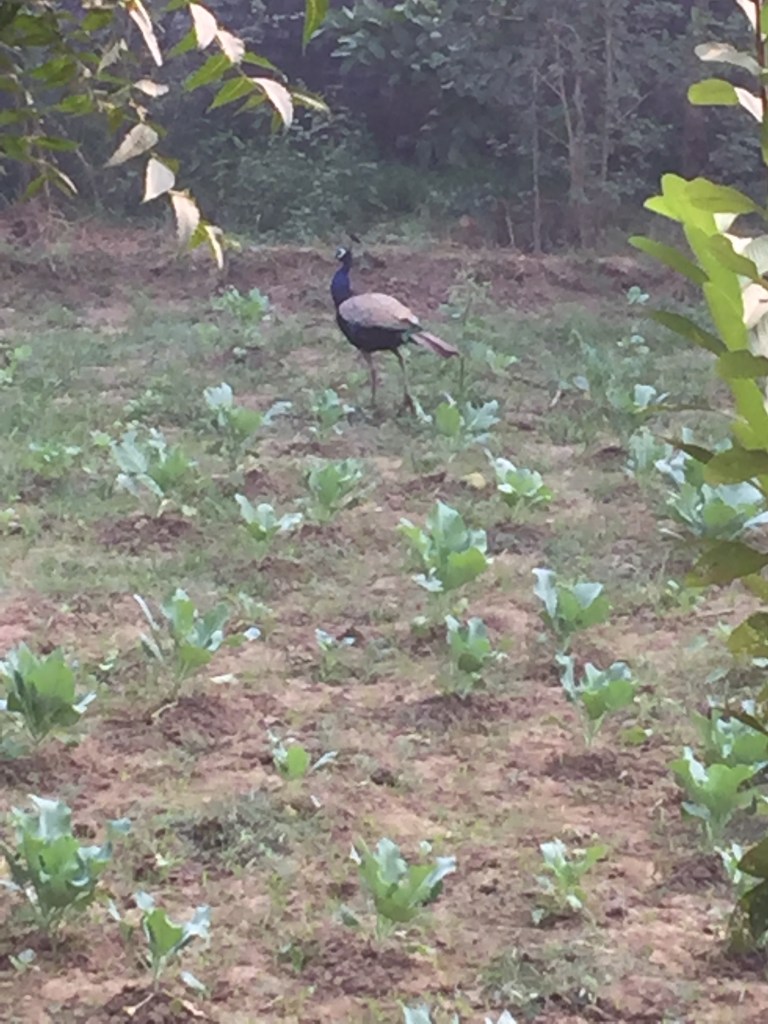
The peacocks strut around our vegetables all day.
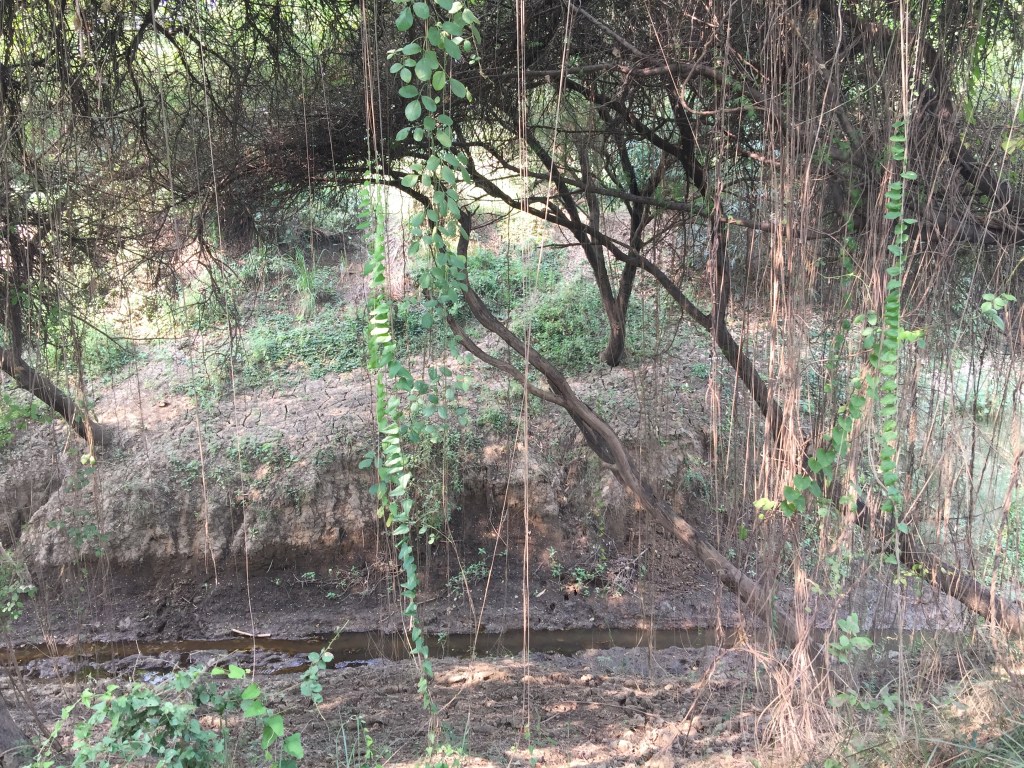
Lastly, here is the nala these days.
The vines are called ‘giloy’, an important medicinal plant (heart-leaved moonseed; Tinospora cordifolia). They grow wild all around the nala.
The land is so welcoming and lovely these days, and will be for months now. It’s hard to remember how was just a month and a half ago. It was so wild, frantically growing, and crawling with life, that it was difficult to even go there, and when we did, it felt as though we were trespassing. We are going to have to use these months very carefully to prepare for the next monsoon.
The good thing is that all everyone wants to do these days is spend the whole day there!
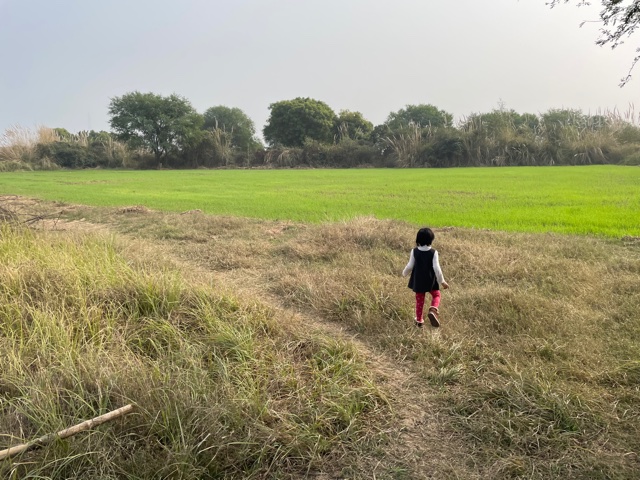
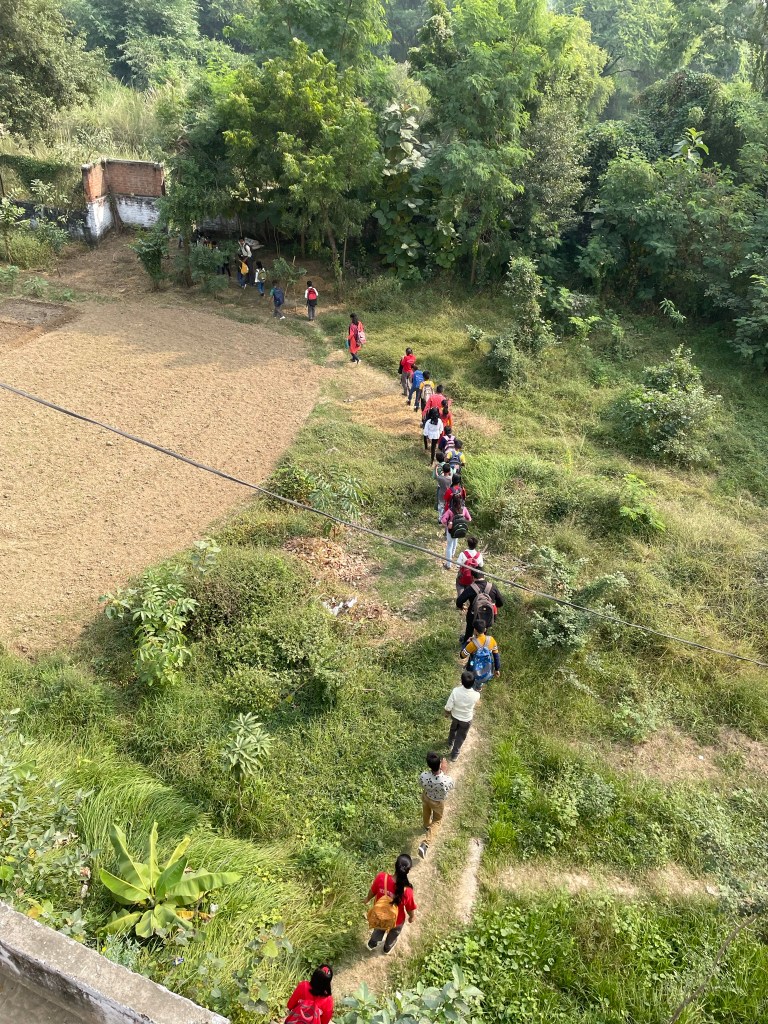
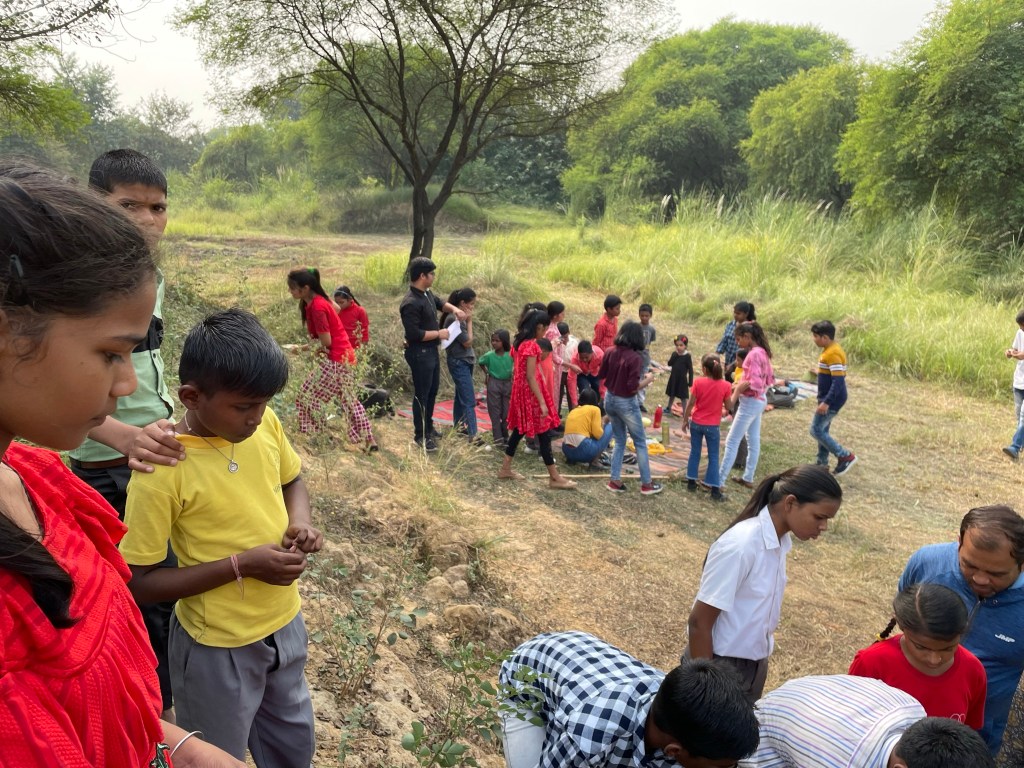
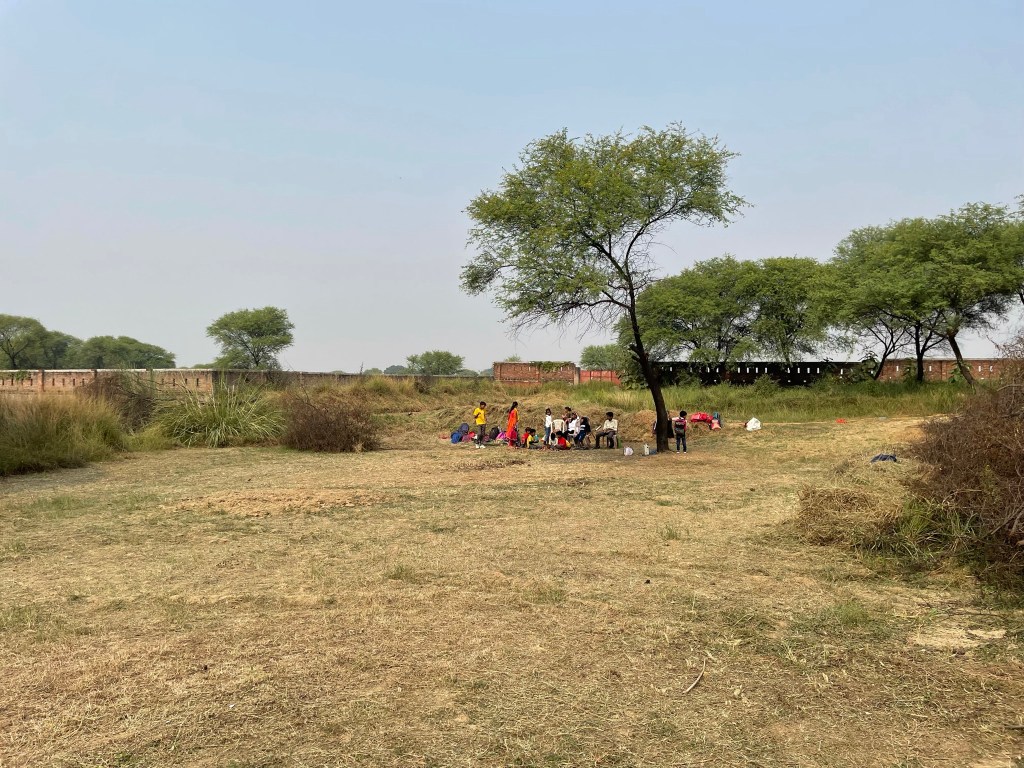
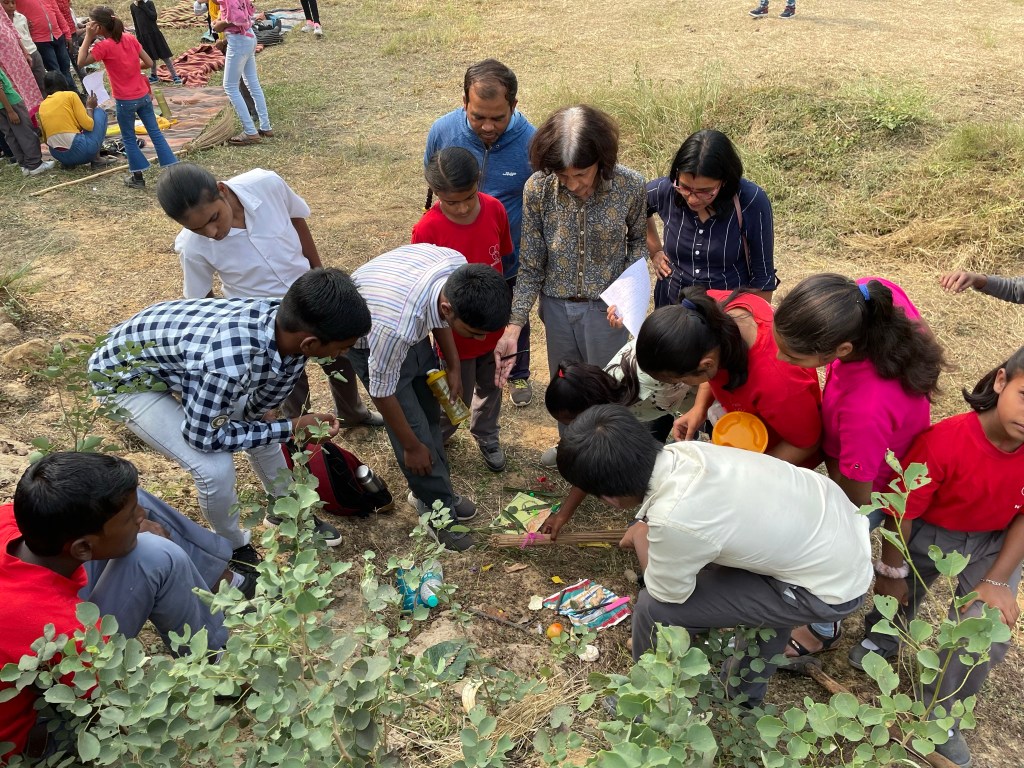
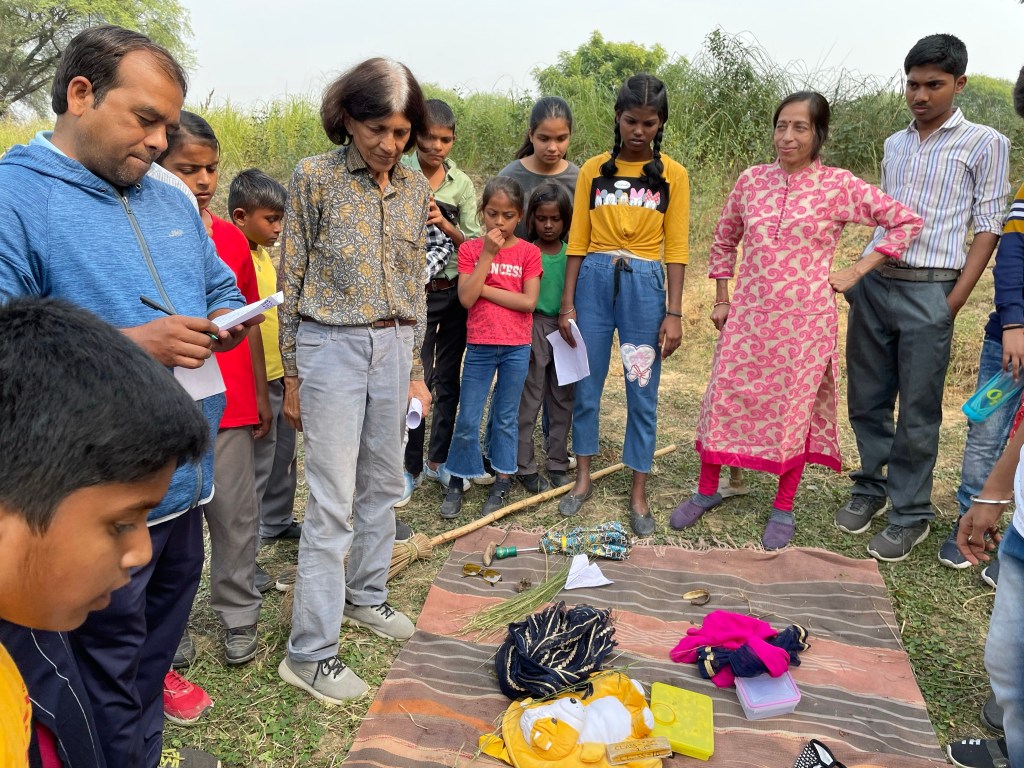
On the 14th of November, Jawaharlal Nehru’s birthday, the country celebrates ‘Children’s Day.’ We usually have a picnic and games–usually a scavenger hunt, and this year we decided to take the children to Chhitauni.
It was the perfect setting, and we rounded it off with a yummy meal of puri, alu, and halwa cooked right there on chulhas made from mud and brick–supplemented by everyone’s tiffins.
 gangavan.org