Tree list

We are aiming for 100 each of the following, through a combination of our own seedlings, cuttings, purchases, and gifts:

  1. Semal
  2. Jamun
  3. Laung (clove)
  4. Arjun
  5. Sal
  6. Sagwan (teak)
  7. Kanak Champa
  8. Indian coral
  9. Mahua
  10. Shirish
  11. Gulmohur
  12. Amaltas
  13. Mango
  14. Imli
  15. Kadamba
  16. Almond
  17. Nutmeg (and mace)
  18. Bay leaf
  19. Shisham
  20. Anjan
  21. Subabul
  22. Neem
  23. Kachnar
  24. Ashok
  25. Palash
  26. Gonj
  27. Bakain
  28. Maulshree
  29. Peela Tabebia
  30. Barna
  31. Jarul
  32. Kajelia
  33. Him champa (magnolia)
  34. Shaitan
  35. Resham rui
  36. Jacaranda
  37. Amla
  38. Shahtut
  39. Kathal
  40. Bel
  41. Chiku
  42. Sharifa
  43. Papita (papaya)
  44. Amrud (guava)
  45. Litchi
  46. Cinnamon
  47. Bakul
  48. Babul
  49. Kikar
  50. Chandan
  51. Rakht chandan
  52. Bilsa
  53. Kaner
  54. Safed champa
  55. Harsingar (Parijat)
  56. Bottle brush
  57. Chandani
  58. Vilayati kikar
  59. Sawani
  60. Meethi neem
  61. Kela (banana)
  62. Ber
  63. Nimbu (lime)
  64. Narangi (tangerine)
  65. Anar (pomegranate)
  66. Jangli jalebi
  67. Pepper (vine)
  68. Bargad (banyan)
  69. Peepal
  70. Bans (bamboo)

The following are non-“native”, but we will put 10 to 15 of each out of shauk (more about the debate on ‘nativity’ in another post!).

  1. Akhrot (walnut)
  2. Pimpri (java fig)
  3. Chilgoza
  4. Kaju (cashew)
  5. Seb (apple)
  6. Alu bukhara (plum)
  7. Aru (peach)
  8. Santara (orange)
  9. Avocado
  10. Royal palm
  11. Chini pankha
  12. Fishtail palm (mari)
  13. Palmyra palm (tar)
  14. Mayur pankhi
  15. Sago palm
  16. Coconut
  17. Khajur (date palm)
  18. Supari (ereca nut)

Feel free to contact us if if you have any to contribute! Let us know if there are any wonderful varieties we have forgotten.
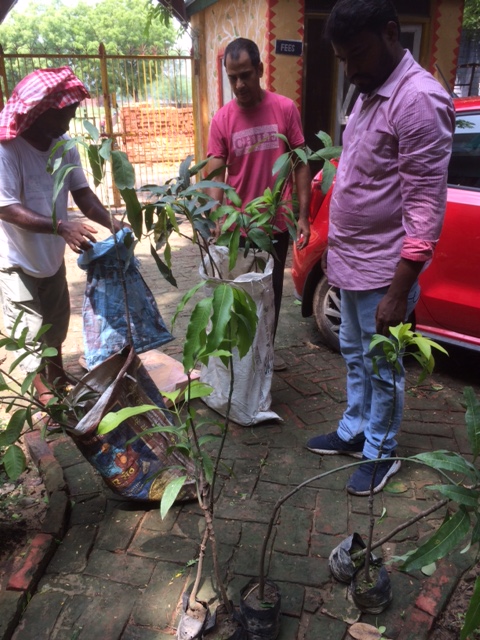
We decided to start buying trees from local nurseries, rather than waiting for the rain to stop to get an entire truckload from Kolkata. (above) We begin with 22 mango trees! – A mix of local varieties.

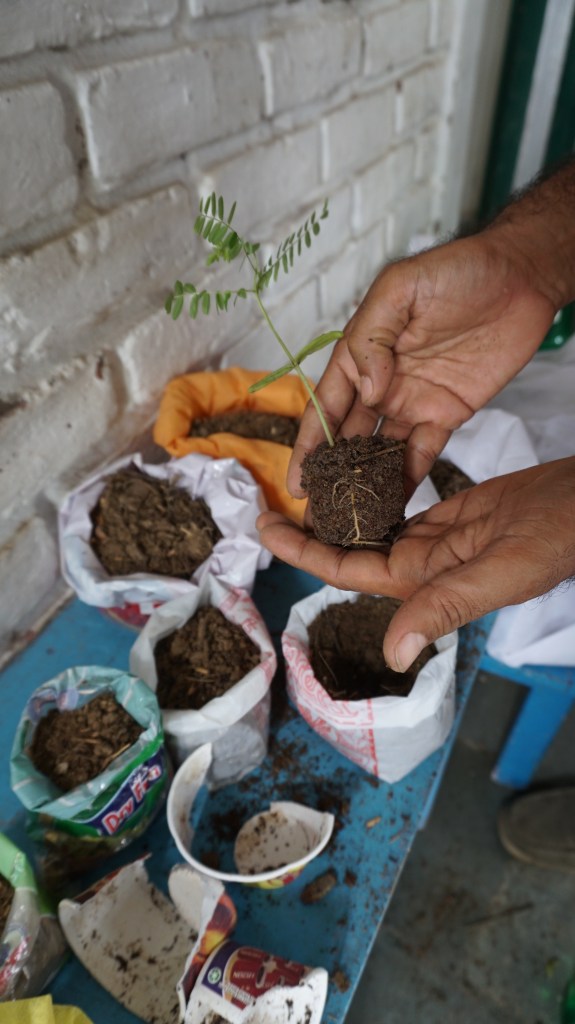
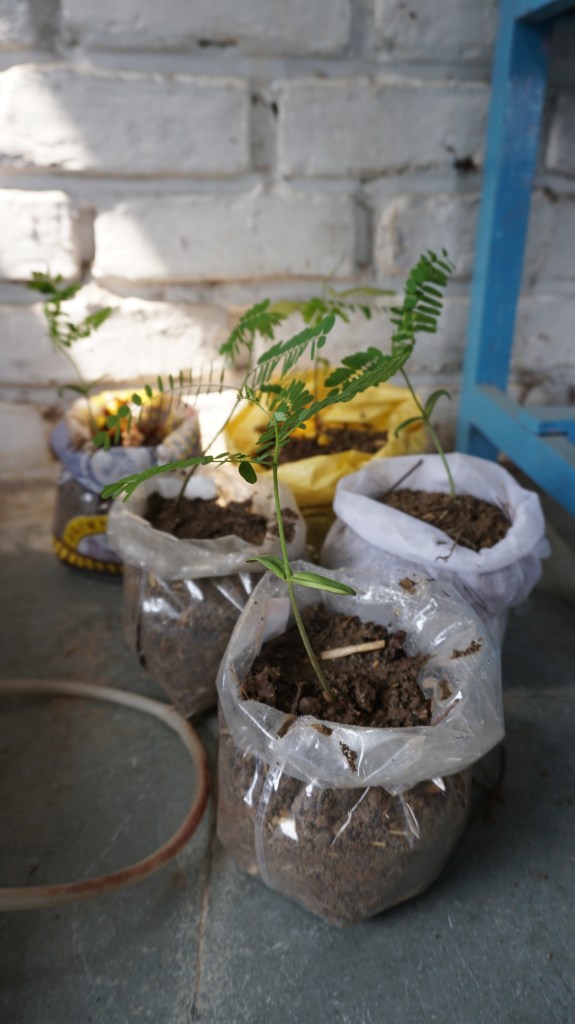
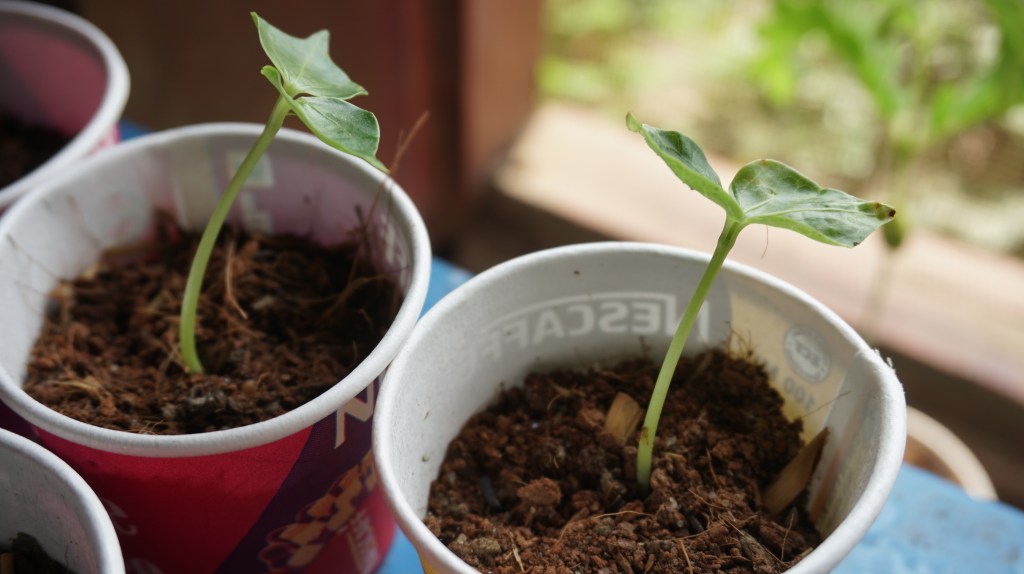
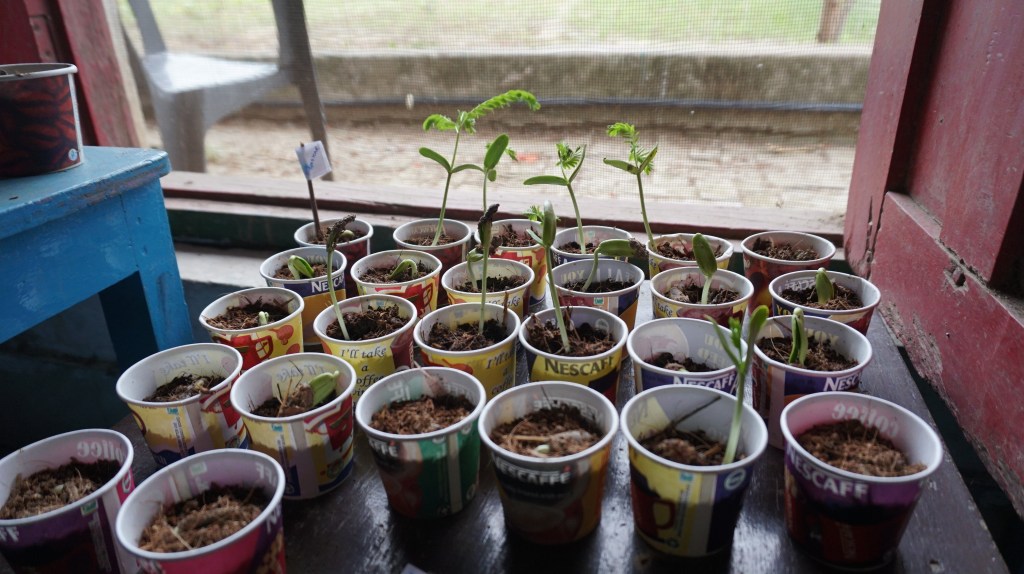
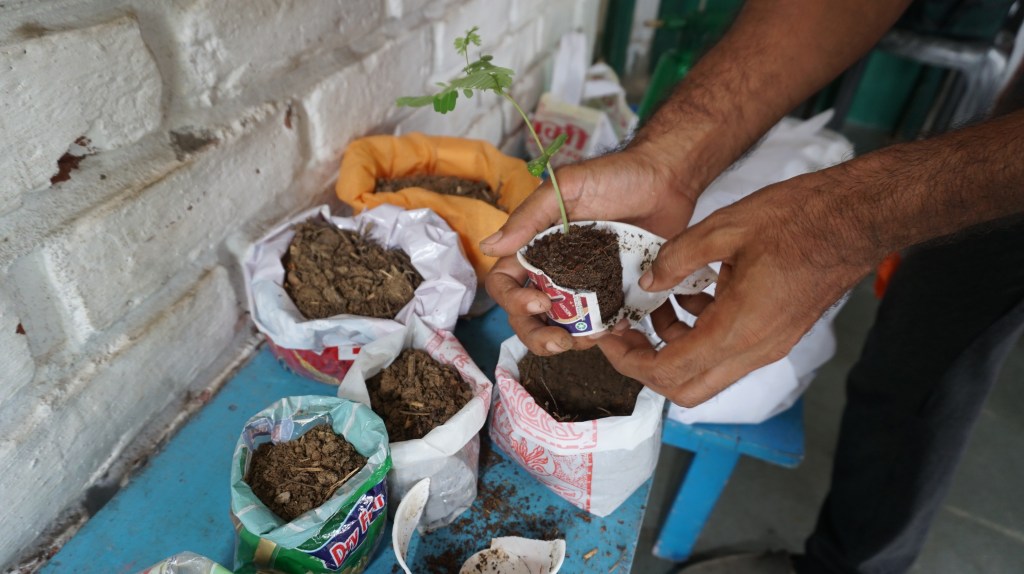
We transplanted our larger seedlings today, in improvised seed bags (below).
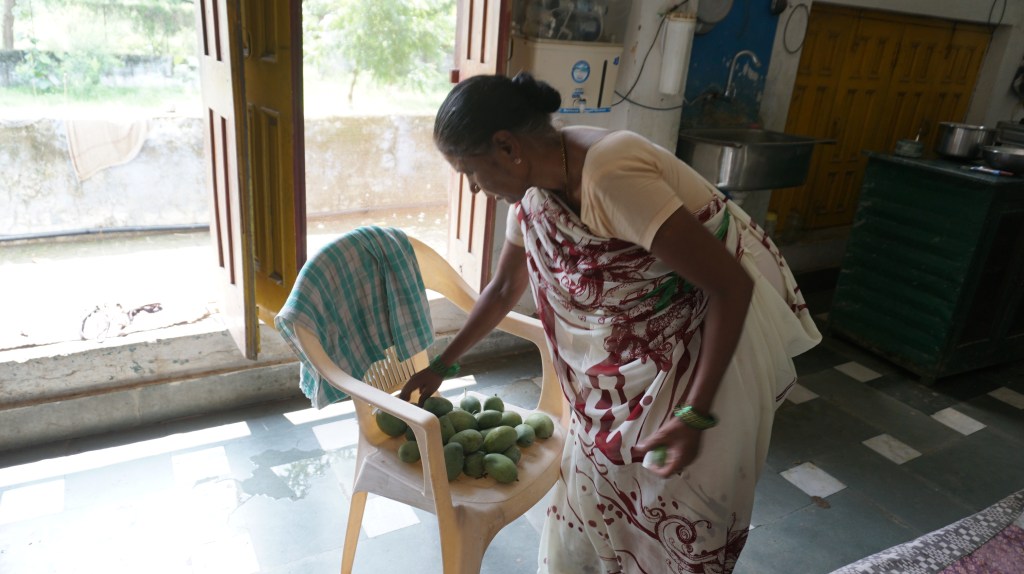
(Below) The last mangoes from our heroic three-year old tree in Betawar. Today, we will have mango chutney of a few green ones, and the rest will be wrapped in paper rather than straw to ripen slowly. These mangoes are among the best we have ever tasted, without exaggeration.
Summer Solstice

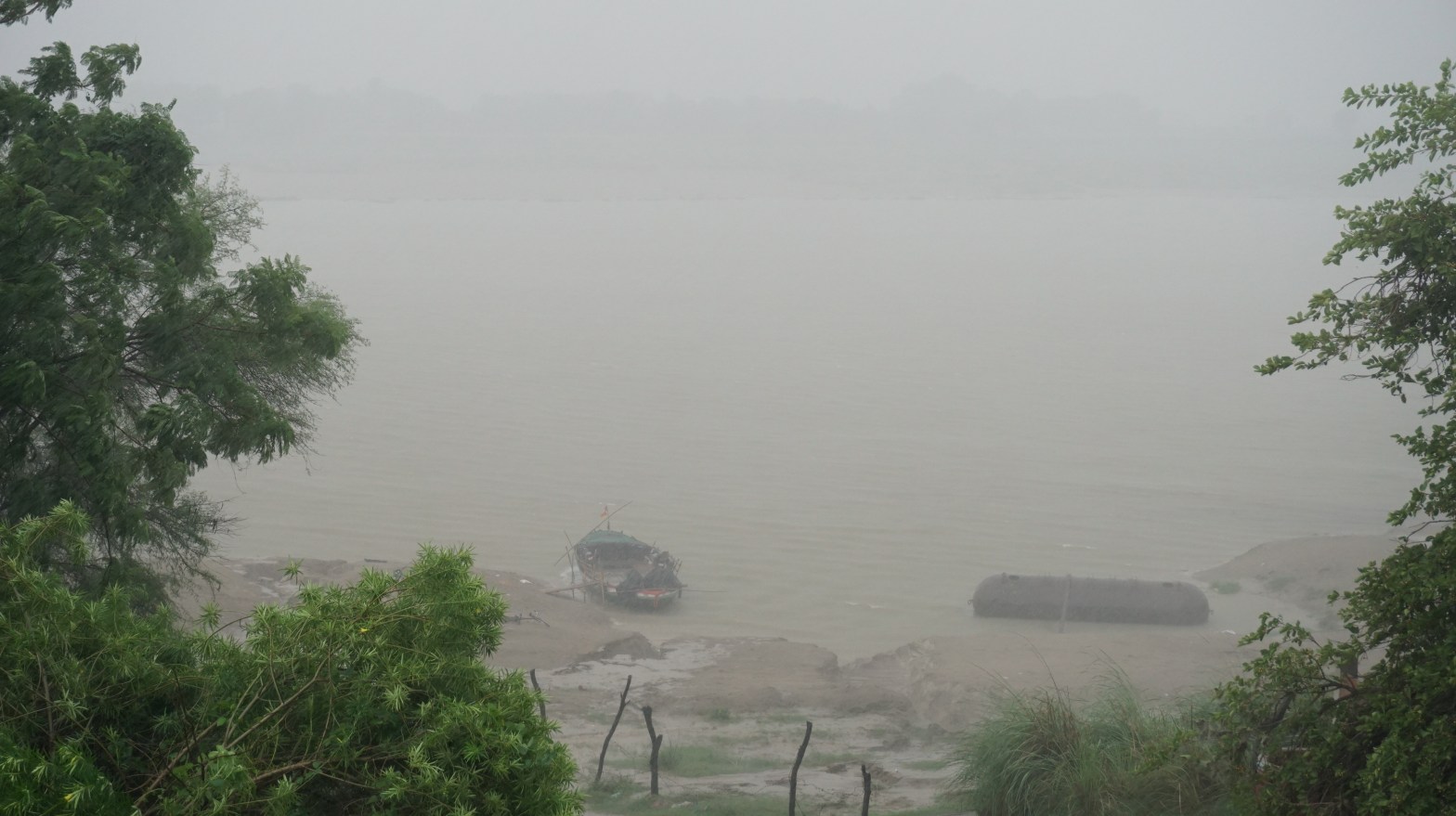
Sol = sun, sistere = to hold still. The day when Surya devata or the Sun God shines closest, longest, brightest in the Northern Hemisphere. It may be a great day for the sun in universal terms, but here, in our villages of Betawar-Chhitauni, the sun has not been glimpsed for days and is not visible this morning. An anxious perusal of the forecast reveals that there may be a few days of break from the persistent rains, which means that we might actually see the sun for those days. At present, the sky is grey and the wind is cool. The windows are closed and still one does not need the fan, let aside the cooler.

What does the appearance or disappearance of the sun mean for us?

With our ambitious planting programme, we needed the sun to bake our pits and trenches, now full of chopped straw, sand and mud, and cow urine, cow dung and water in an elixir-for-plants known as jivamrit. Since the sun vanished before its time, the trenches are soggy, but hopefully, retain their nutritious juices. We need the sun to dry up our cowdung so it can mix well with the soil for the remaining trenches. We needed, and need, the sun to plant our seedlings and saplings. Just water, and continuous drenching water at that, is sure to do them in.

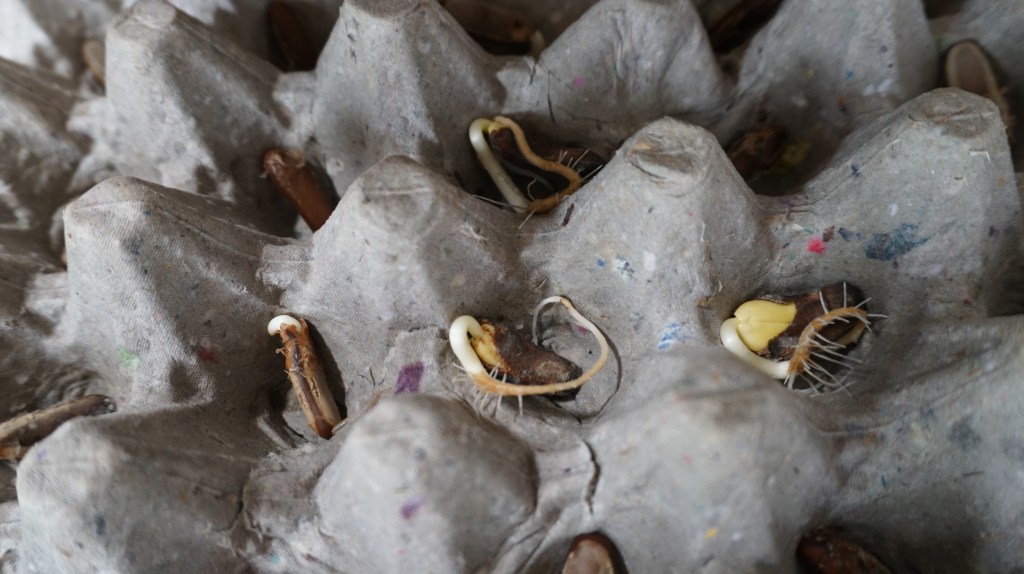
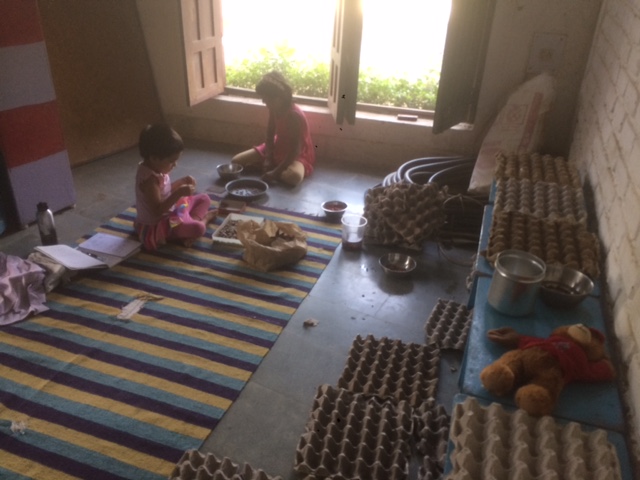
We have a room where seeds are sprouting and being transplanted from smaller, darker places such as egg cartons and the folds of moist paper and cloth, to sunlit places in containers with rich soil. They are all yearning towards the light from the windows. We need to put them in a large, safe place where they could get shaded sun. For some days every place has been only too shaded. When sunlight is at a premium you long for it as the saplings do.

We need the sun to dry out our pathways. We are not able to access our ditches! We are not able to go to every corner of our land! We are stuck in the mud! A small drying out by the sun goes a long way.

The Summer Solstice is called Midsummer by some folks on other continents. One ‘folk’ was Shakespeare, who is as much ‘ours’ as ‘theirs,’ as many of us have always believed. We in India have acted parts of, quoted verses from, made allusions to, even been inspired by, A Midsummer Night’s Dream. At least, by Puck, and Oberon, and the ill-met-by-moonlight proud Titania.

The Midsummer Night’s fairies make me think of our own fairies in Shankar’s Fairies, shortly, we hope, to be completed. In that story too, the fairies come at night, but the house the story is set in comes to life with shafts of sunlight during the day. In scene after scene, the sun rises and the action begins.

And Puck brings me to another person from the wild conquering West who is also ours, Kipling. In his utterly delightful book, Puck of Pook’s Hill, he rhapsodises about the hills and dales and streams and vales of England. His evocative lands touch me in a way I am still waiting to be touched by the lands of Betawar and Chhitauni. Only because I grew up with England in my imagination and not village India.

The lovely, exciting task before us, then, is not only to grow a forest in our Ganga Vana, but to make children grow up with their imaginations touched by its beauty.

One day in the season of rain

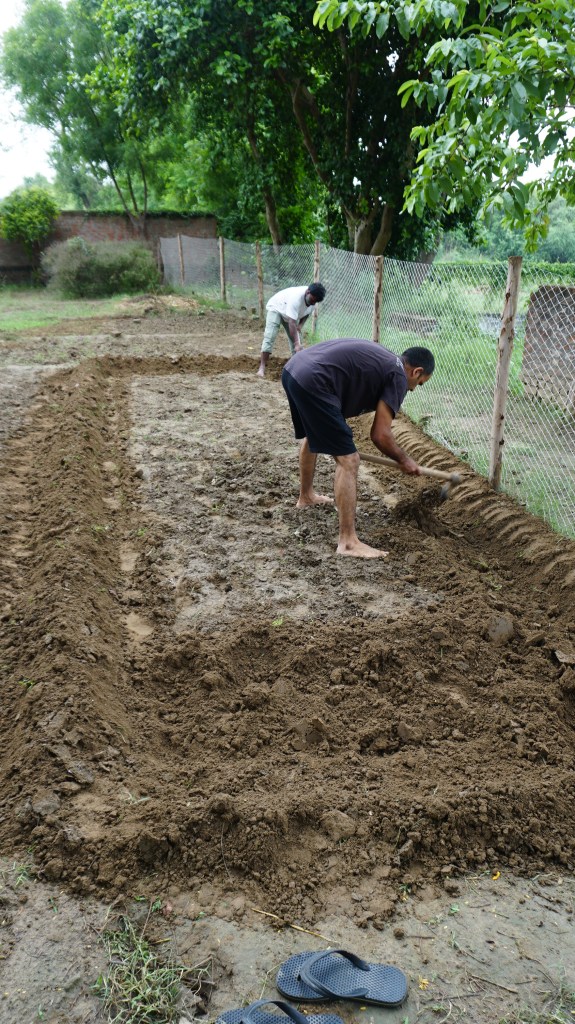
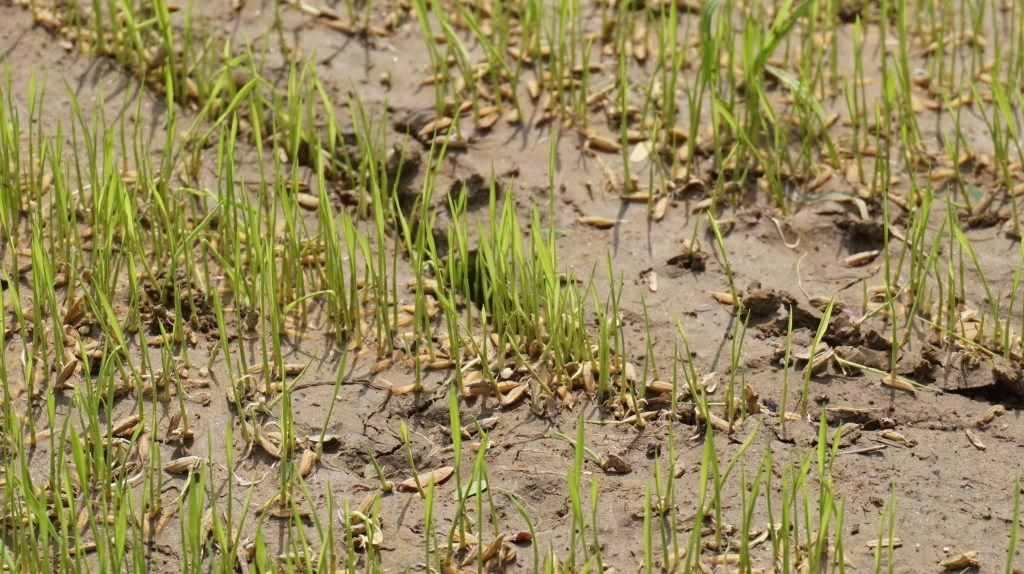
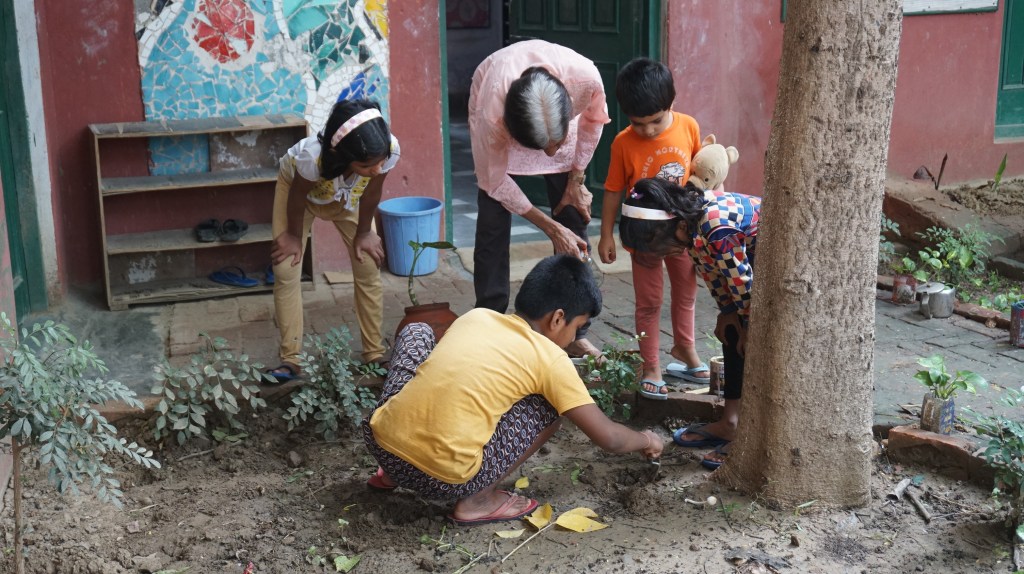
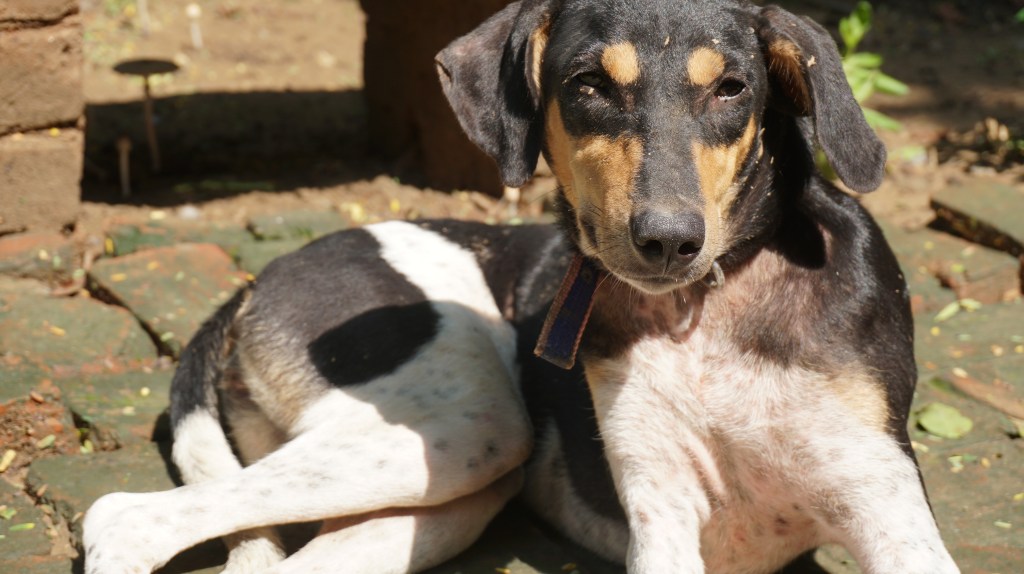
Our work continues in the gaps between the thunderstorms. Below: preparing the nursery for rice last week and the rice emerging; children inspecting mushrooms and earthworms while Rumi snoozes in the brief moments of sunshine.

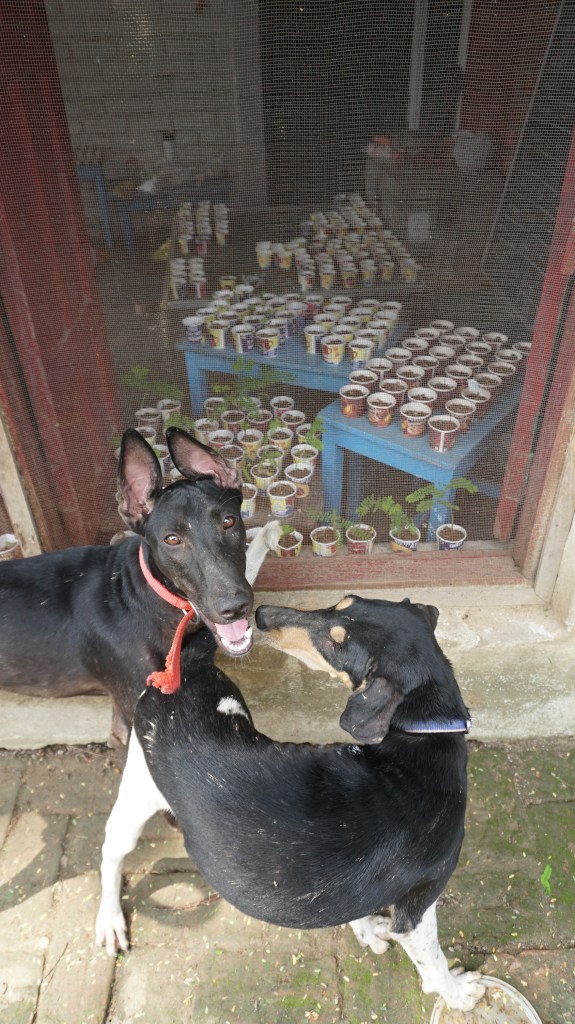
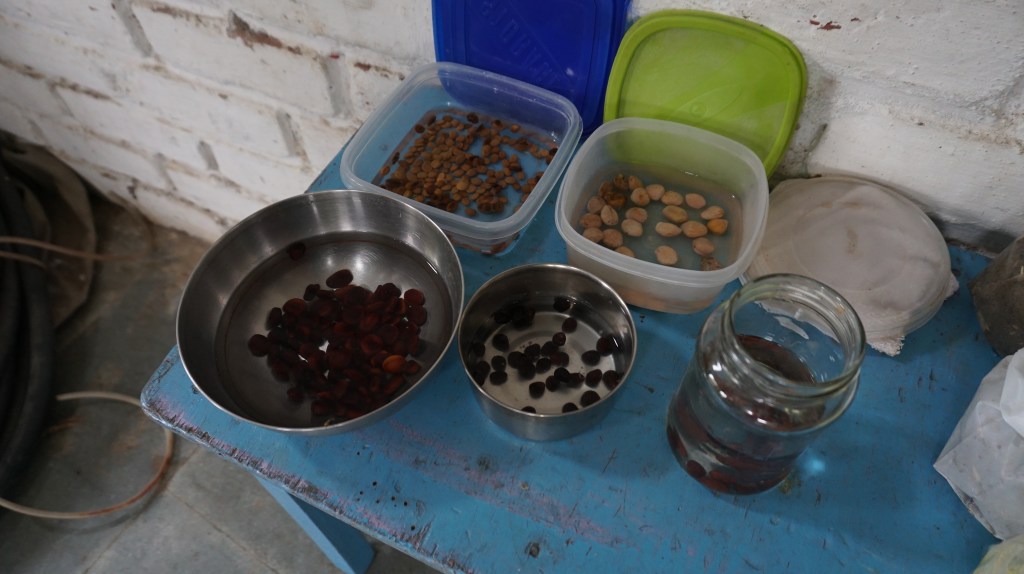
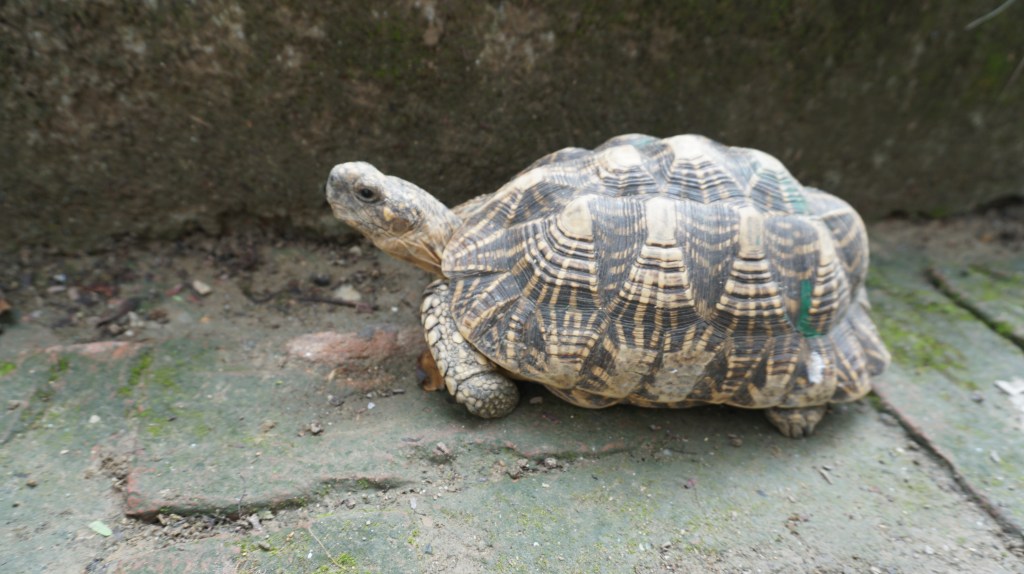
Semal plants emerge after a long hibernation and the seed office is inspected by the dogs as new seeds are a-soaking. This is Abdul Karim, our resident tortoise’s favourite season!

“Where’s the loo?”

“This is not the tale of how we always had to strategise before planning to spend the day, or half the day, on our new up-coming forest retreat, “Ganga Van.” The multi-acre campus had no bathroom. It did have an “office block,” with a good-sized room set up as an office, an unfinished bathroom and kitchenette, another small room for guests, and a guard room, pump room, and generator room. There was a toilet adjoining the guard room, but…. with a new squat toilet, tap, and running water, it was good by village standards, but not by mine.”

Read further from this post by Prof. Nita Kumar, the director of NIRMAN:

First trenches done!

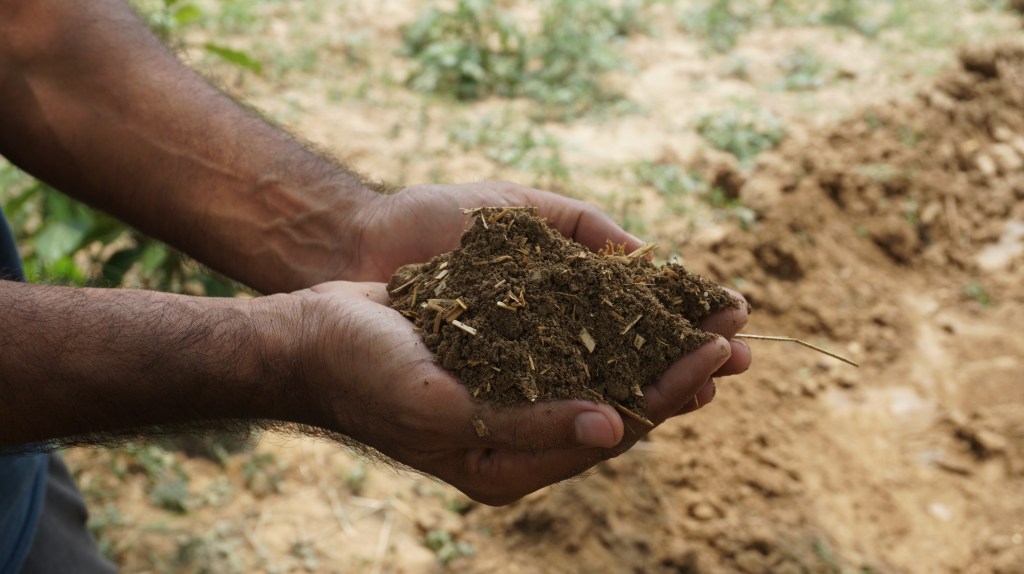
We managed to hold off the rain till last night (!), and started filling the trenches yesterday. Twelve are done, and what beauties they are! They all have a mix of soil, cowdung, straw, and leaves. They are porous and feel rich and ready to welcome new life. It finally rained last night, so that is also great for those trenches. Today, we sprinkled the liquid fertilizer (jeevamrit) on them, and mulched them with grass until it is time to plant.

We still have many, many trenches and pits to fill, but the remaining cowdung is damp and won’t mix well with the soil. So, for the rest, we have to wait till it is sunny again, and it can dry up. Waiting no longer feels like as much of a set-back now! We have some experience under our belts: knowing how long each trench takes and exactly how much material it needs makes a big difference.

In other news: our seedlings are doing well. Onward!

Whut?!

But….why?? Rain? Now?? Seriously??!

We are literally waiting for the sun. We have been getting tractors and tractors of aged cowdung, and picking up piles and piles of leaves, and have bought quintals and quintals of straw. We have enough to start filling the trenches with a mixture of mud, straw, leaves, and compost, and have been planning to call the excavator in a day or two. But if it rains, and continues to rain for more than a week, we will be totally washed out.

Well, no use arguing with the gods. The good thing about all the rain in the past month has been that the existing trees have shot up, and the kasha grass on the edges of the land has turned green – we badly need it to grow as one of our main layers of protection against erosion.
Going to order plants from the nursery in Kolkata tomorrow. Our seedlings are doing well, touch wood!

We drove through Banaras Hindu University yesterday to get permission to pick up fallen leaves from their 700 acre campus. We all drooled at the gorgeous, decades-old trees. I’m going to go back specially to collect seeds.

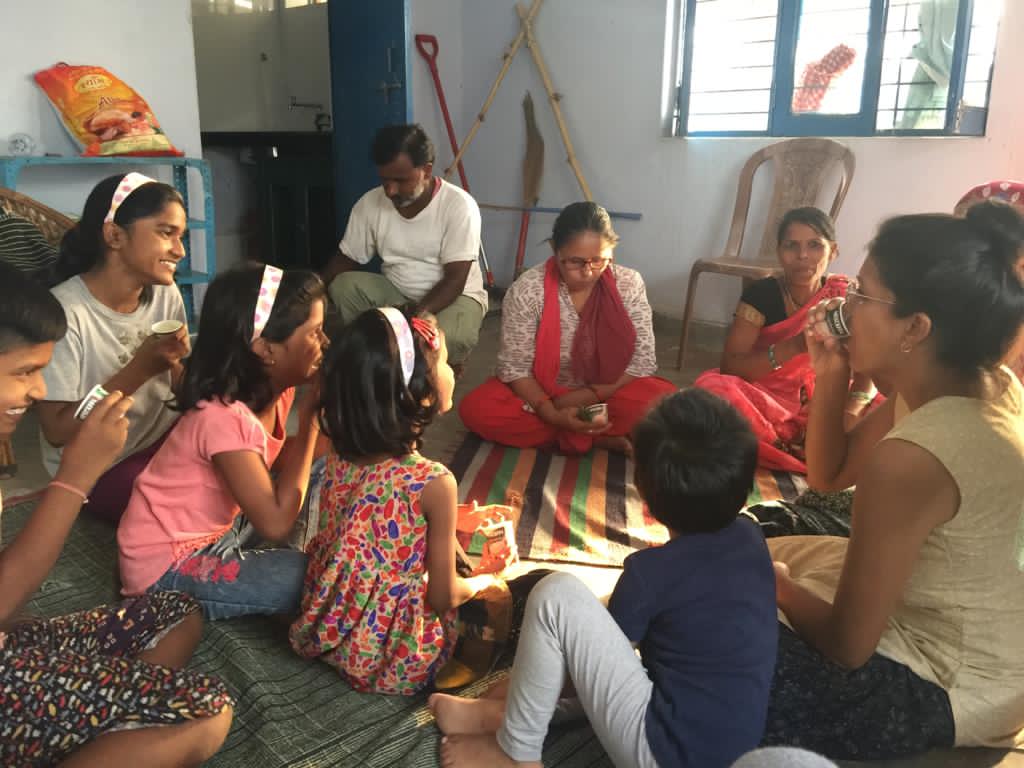
Here’s a glimpse of our kheer party on Tuesday (right). We played word-Antakshari and sipped kheer from tiny cups and generally relaxed.

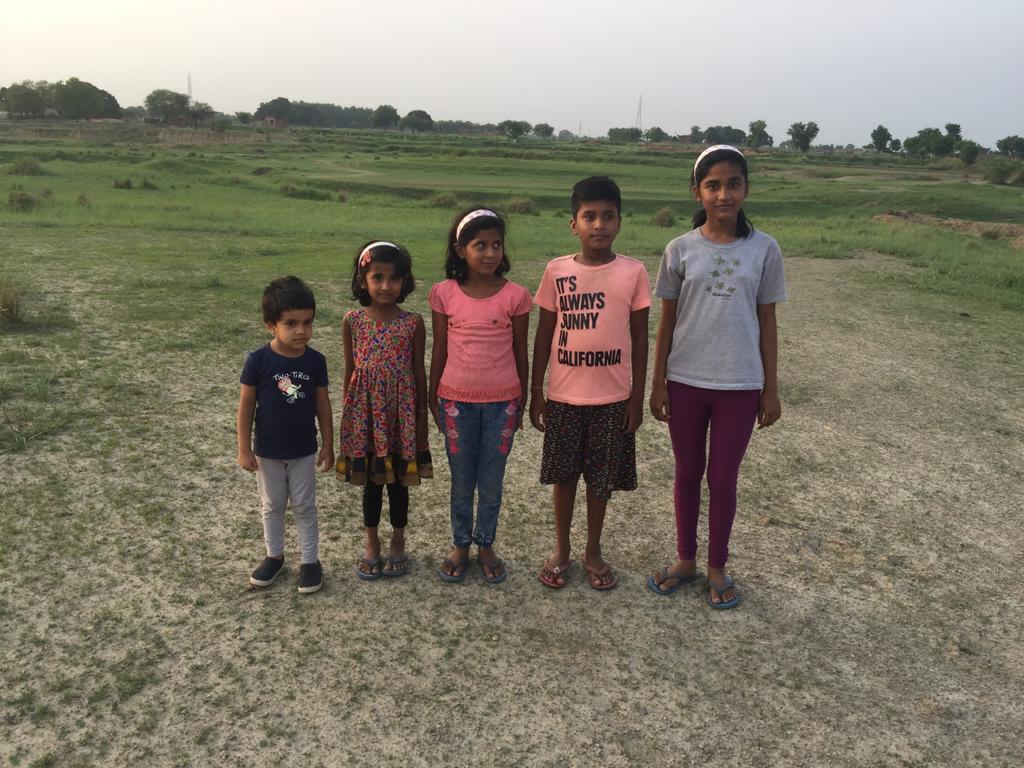
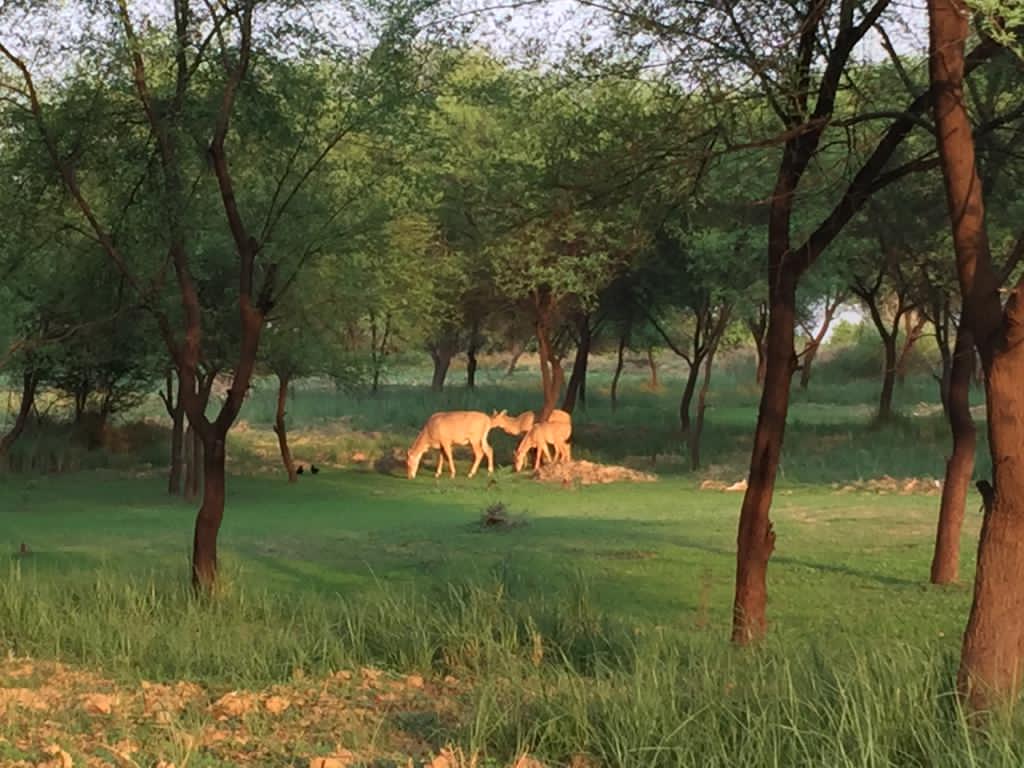
The children (above) love wandering about the land. On our way back, we were lucky (again) to see the lovely nilgai and their young… (below)

Hello, babies!

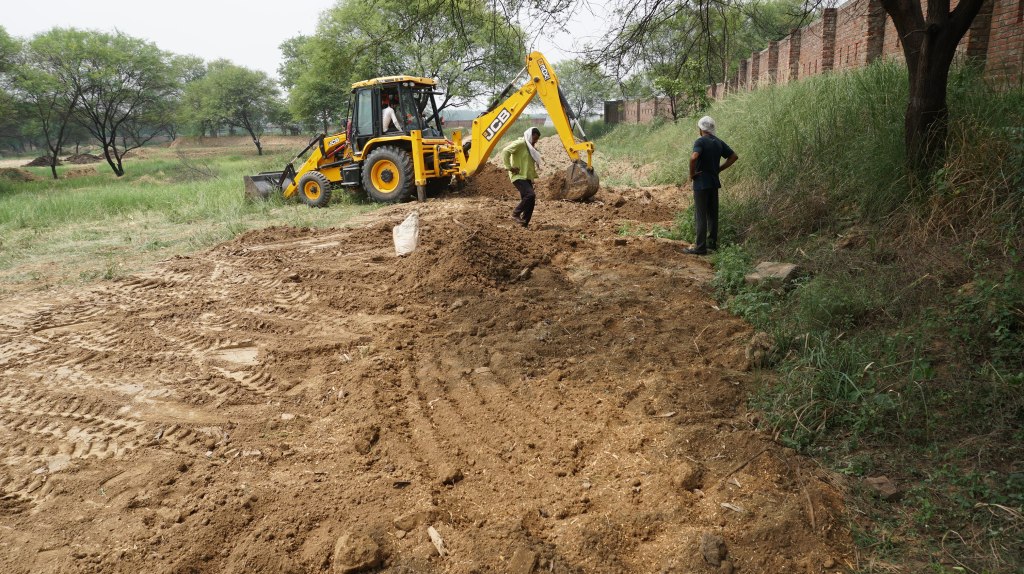
The two things we have been working on for the past few days are seeds and trenches. Re: the latter, we are in the process of buying and gathering together massive amounts of straw, leaves, and cowdung, and trying to distribute them in piles all around our site. It’s a lot of manual labour, and the size of the trenches is daunting: these enormous craters in the ground with piles of mud next to them, most of which does not seem rich enough to support life (a lot of our soil is sandy or stony). We’re pushing on, because we have decided on this technique after a lot of deliberation, and the crux of the whole thing is the preparation of the soil.

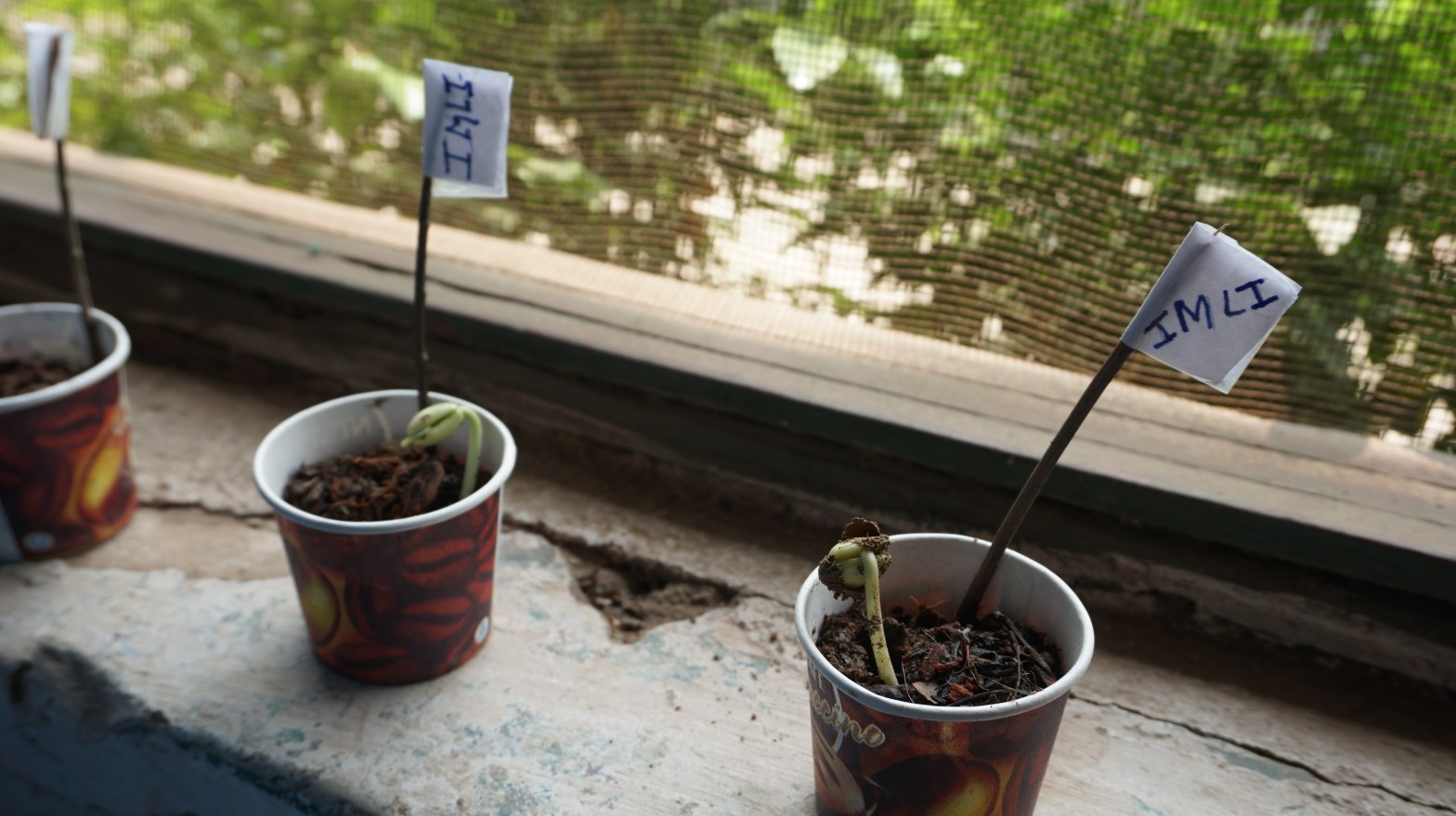
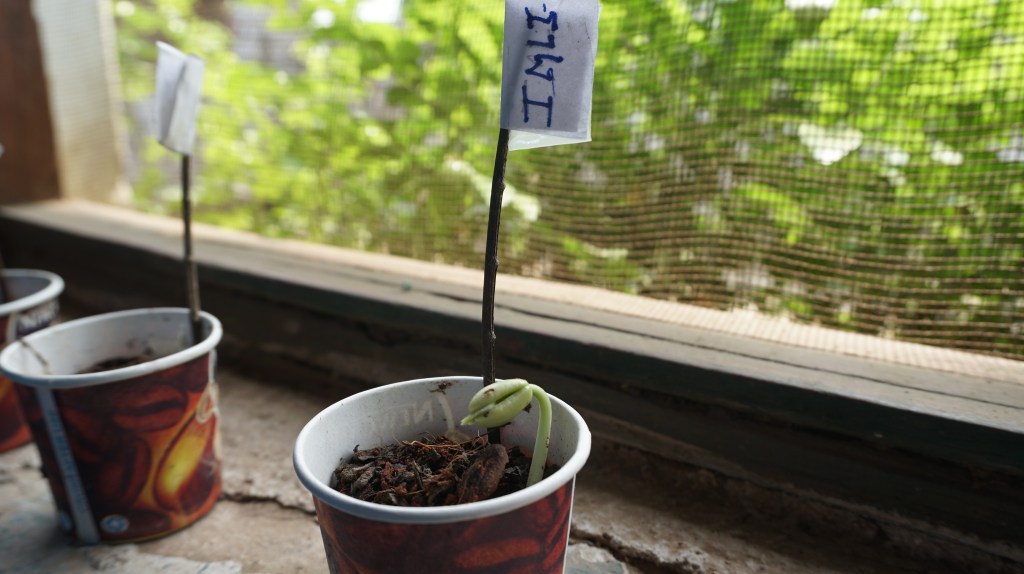
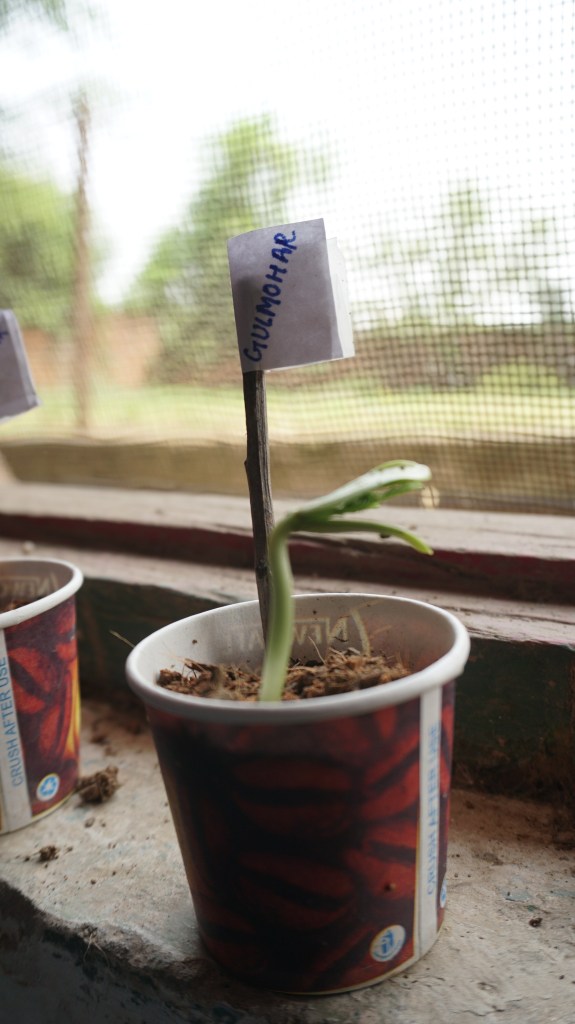
A much more immediately satisfying part of the preparation is the seed work! We had sprouts a few days ago and seedlings today! How lovely they are. By far the most successful species so far are gulmohar and imli (tamarind). But who is to say that speed = success. We are waiting with bated breath for the litchi, shirish, and amaltas to emerge. Neem and shisham, though wonderful, are present in such abundance around us that we tend to take them for granted. For now, we are planning to just transplant the many saplings growing on their own all over our Betawar land.

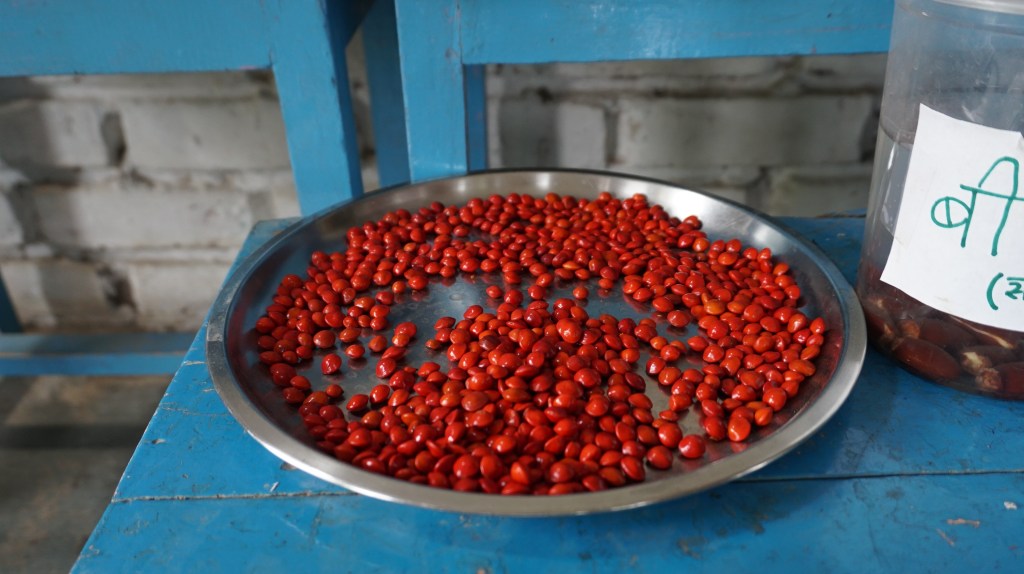
Unfortunately, we are failing with the lal bij (false red sandalwood: adenanthera pavonina). They swelled up impressively after soaking, but the ones I started in cardboard egg cartons got mold, and the ones in cloth look dried up and shrivelled. Let’s see what happens to the once I put directly in the soil mix after soaking.

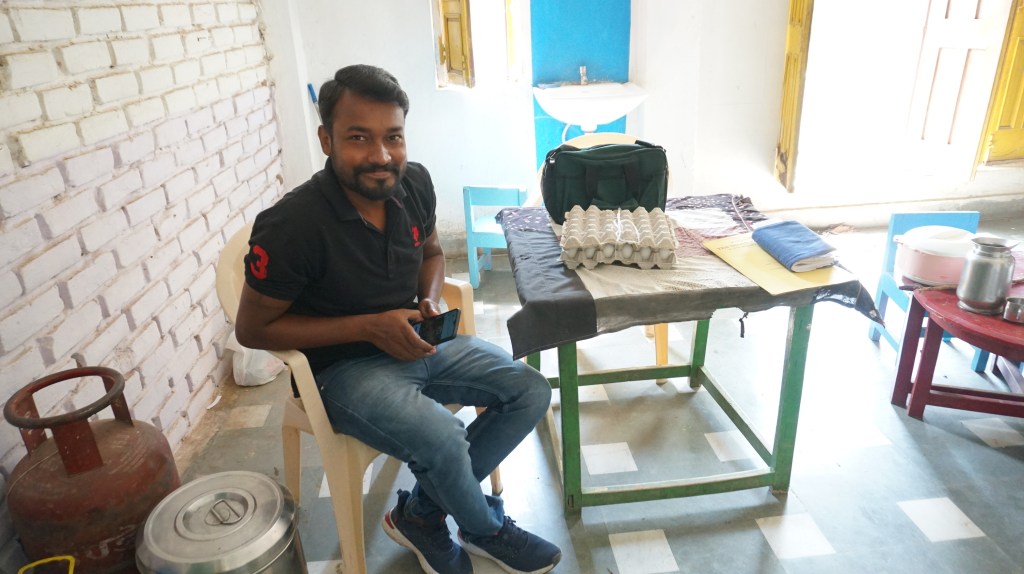
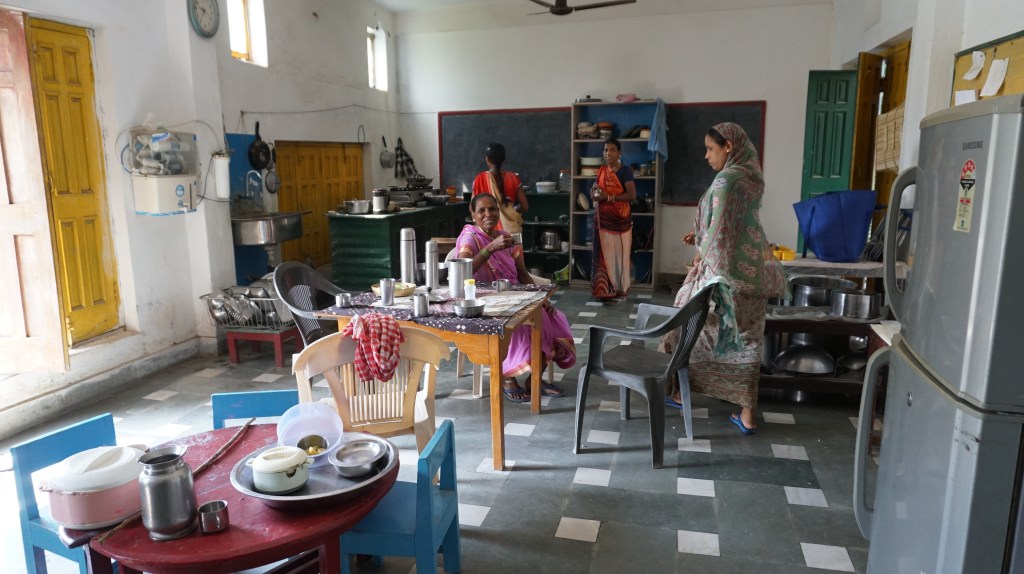
In other news, we are inaugurating our new Chhitauni office stove today: Ramesh is making kheer for everyone. We’ll troop over there at the end of the day, children and all.

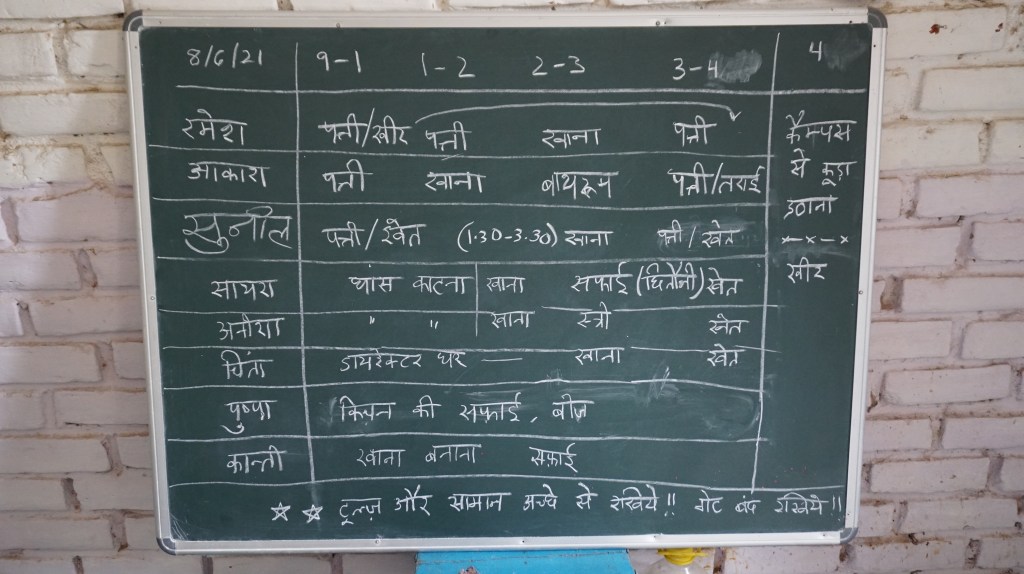
Here’s a glimpse of our morning bustling, after the meeting to plan the day’s work:

Seeds and cuttings!

We have started working on our seedlings. We will be able to afford to buy about 2000 plants from the nursery. Those will be our specialty fruit/nut/spice trees and trees that aren’t available easily in the vicinity. But all the others – over 4000 – will have to be added over the monsoon and following year(s) from gifts and through growing our own from seeds and cuttings.

We are starting with the seeds of gulmohar (flame tree: delonix regia), amaltas (Indian laburnum: cassia fistula), rakt chandan (red sandalwood: adenanthera pavonina), shirish (albizia lebbeck), and semal (red silk cotton: bombax ceiba). We have an abundant supply of neem (Indian lilac: azadirachta indica) and shisham (Indian rosewood: dalbergia sissoo) seeds, but I don’t think we’ll need to propagate them because we have so many saplings growing on their own in our other plots. We’ll just have to carefully transplant them once the rains start.

We are also going to grow nimbu, imli (tamarind), mango, and litchi, which are in season right now. This is even though we will buy saplings of the latter for the specific grafted varieties as well. We aren’t planting the fruit trees just for the yield. We want to see what kinds of fruit might turn up, even if it isn’t every year, or if it takes a few years more for the trees to start fruiting.

The cuttings will be of peepal, banyan, bamboo, guava, moringa. For now. I think that’s ambitious enough. I have never really done any of these things, but we have been reading and researching and discussing techniques for specific trees for a while. Today, the children helped me scarify, shell, and soak in a new ‘Seed Office’ I cleared out (I will describe these in detail once we achieve results). A nursery bed is almost ready. Later, we wandered around inspecting the shisham, neem, and peepal saplings that have sprung up on their own, and collecting more seeds. It was a wondrous day.

More rain?!

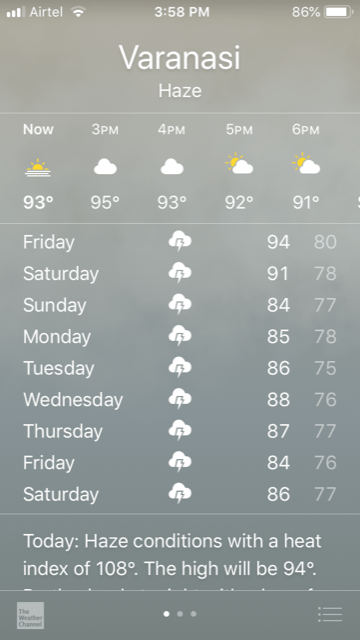
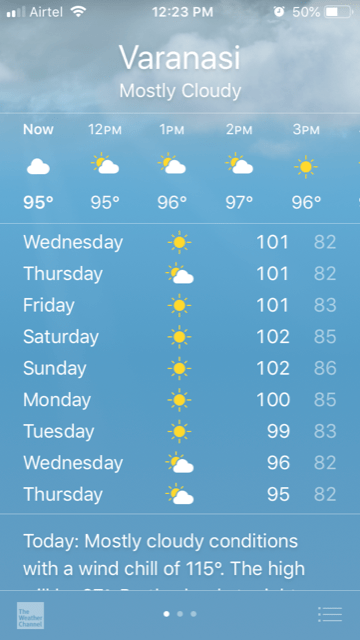
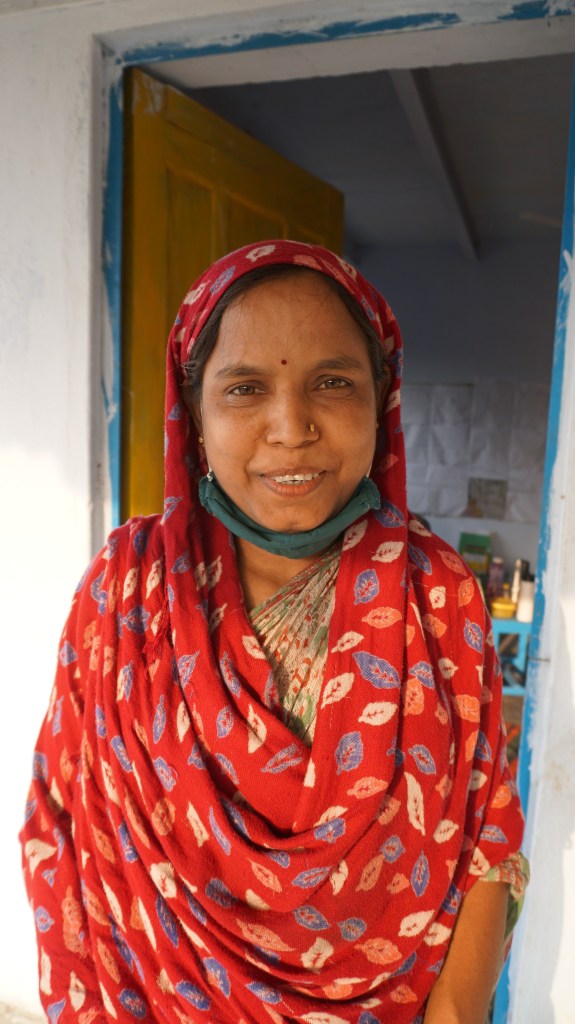
There is no cyclone now, and my weather app shows sun. Then why this sudden downpour? All work has stopped again. The women who came to cut grass are sheltering in the office and snacking. The mud is squelchy and eager to trap anyone or anything who dares set foot on it.
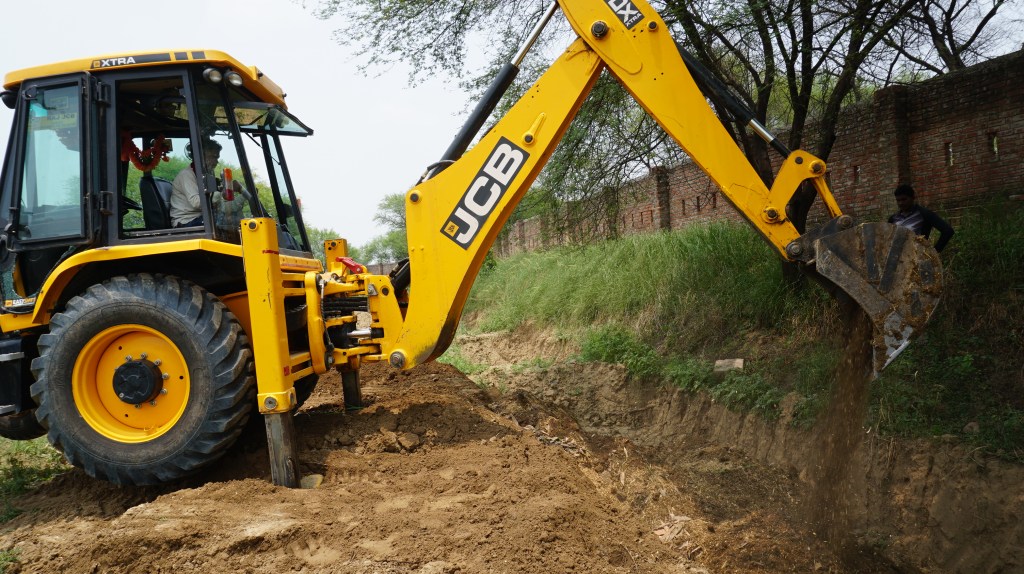
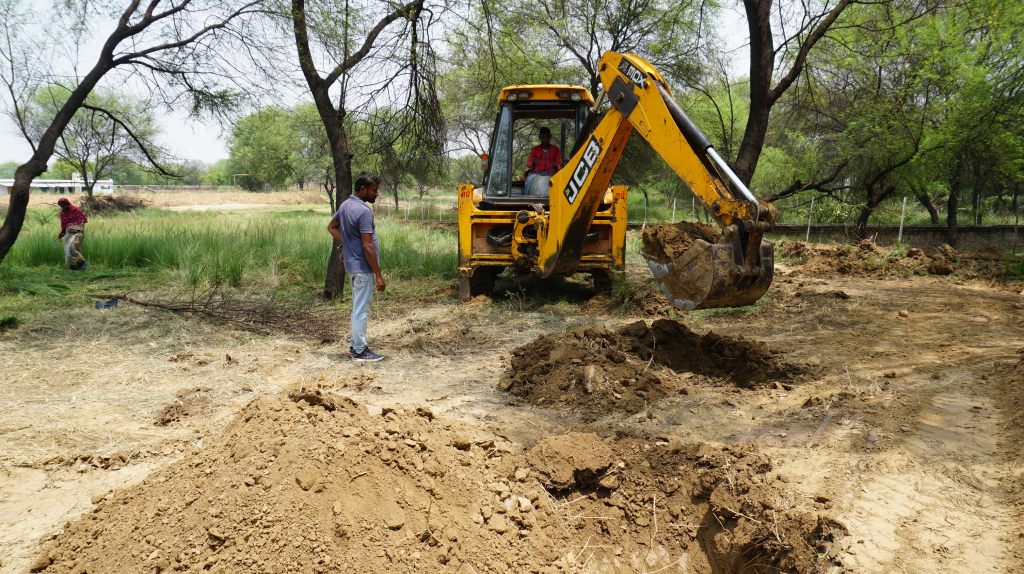
Yesterday was the excavator’s last day of work for phase one. All the trenches have been dug, and most of the mud shifted. After ten days or so, it will come back to put back the mud from the trenches and mix it with the manure and perforating materials. It’s a relief to be done with this big, expensive machine, at least for now!

An engineer is visiting tomorrow and will help us design the rainwater harvesting and irrigation system – including underground cisterns, pipes, streams, and a pond, and the roads and paths through the land. I am very excited about this step.

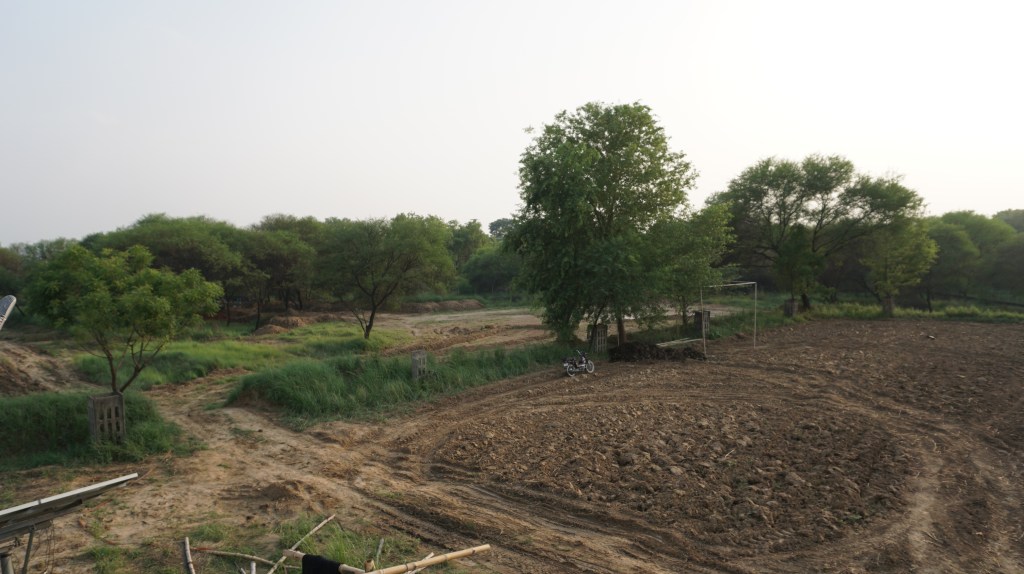
(left) Partial view of the site from the office building.

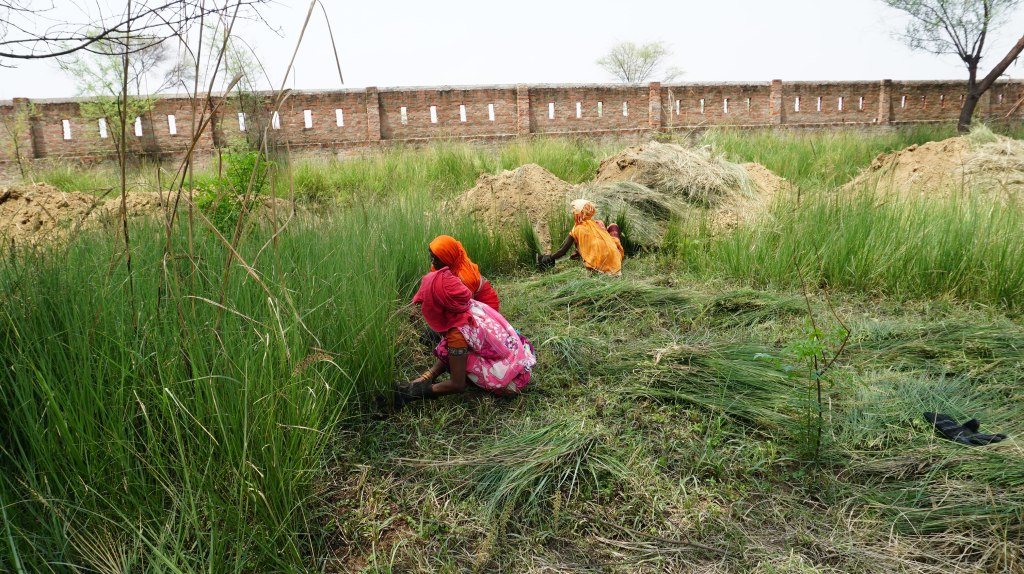
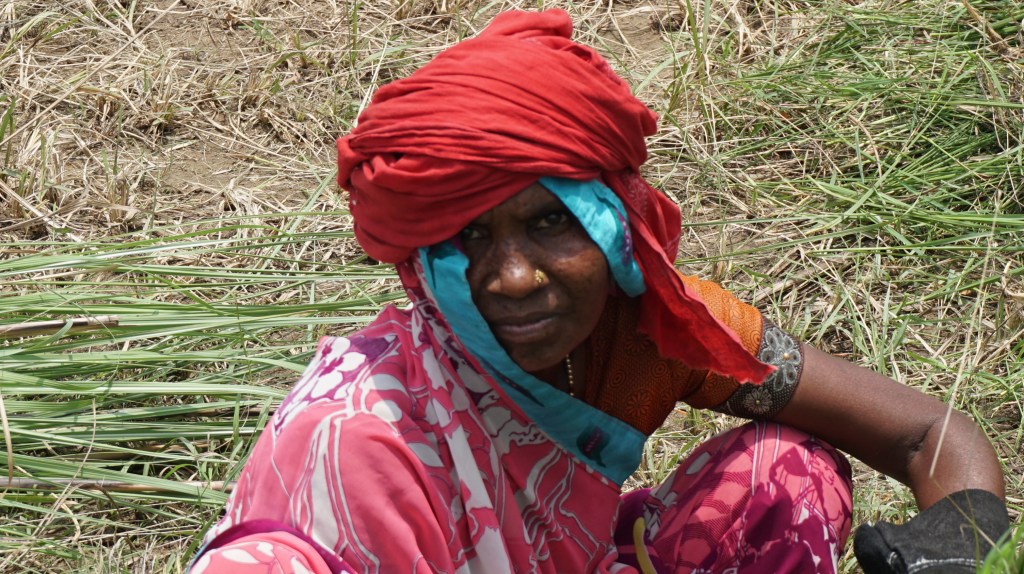
We have brought in four women from the village to cut all the kasha grass on the site. There is so much of it; if we can cut and dry it all, it can work very well in the trenches or even as mulch

We are putting up two tents to protect the cowdung manure once it’s made. This morning the tractor distributed the straw around the site, so that it would be easily available to each trench.